WEST KAZAKHSTAN - BIRDING THE LIMITS OF THE WESTERN PALEARCTIC
TOUR REPORT 2026
Well we did it! A clean sweep of every available target species and the results read like a Who's Who of the most mouth-watering Western Palearctic megas. We kicked off with 6 Caspian Plovers after an anxious 6 hour search, with recent news suggesting that they had bred early and already departed south.... Well no they hadn't and sitting on the floor taking a photo of one male and watching him walk right up to you is something never to be forgotten! The 3 hour drive from Atyrau to Inderbor gave us Paddyfield & Sykes's Warblers and many Red-headed Buntings, and near our motel we nailed the first of many White-winged Larks. But the tour really heated up on the 5 hour 'cross country' drive to Dzhangala when we found Black Larks out in the steppe, along with stunning White-winged Larks. It literally took a whole day of 12 hours searching the vast steppe until we found Demoiselle Crane, so much cause for celebration! And in a fantastic finale to a super successful tour, a group of 8 Pallas's Sandgrouse flew onto our groups' WP list! Yes.... Pallas's Sandgrouse... A fine supporting cast included Dalmatian Pelican, White-headed Duck, Black-bellied Sandgrouse, the mega rare Steppe Whimbrel (thought extinct in 2014), many Black-winged Pratincoles, breeding Levant Sparrowhawk, Horned Lark (ssp brandti), Pallas's Gulls, Eurasian Penduline Tit (ssp caspius), and so much more, including 850 Saiga Antelopes seen in a day...!
DAY 1: ATYRAU STEPPE

With our intrepid group arriving early doors at 04:30am into Atyrau, we were soon on the road with a packed breakfast & lunch and heading out into the steppe in search of Caspian Plover. We’d already been made aware that it had been an early breeding season and that they had dispersed from their breeding sites, so were prepared for a lengthy search.
Many stops to scan potentially suitable breeding habitat were made, and we found many Kentish Plovers, Ruddy Shelduck, our first albeit distant Black-winged Pratincoles, 5 Black-bellied Sandgrouse, Caspian Gulls, Eurasian Hobby, Brandt's Shore Larks, Calandra Lark, Greater Short-toed Larks, Turkestan Short-toed Lark, Isabelline Wheatears, and other common species.
After 6+ hours of searching various gps points of previous sightings of the plover from 2017 & 2019 we had pretty much resigned ourselves to dipping when we came upon a watercourse and some lush looking grass. As we stopped several plovers were seen flying around, and as we followed them in our bins no one dared say a word until the red breast of a male Caspian Plover was spotted and all hell broke loose. In all we had 3 males, 2 juvs and a female. We spent quite some time watching & studying the group of plovers and the photos prove what awesome views we really did get. As if that wasn’t enough, we picked up a rather flighty Sykes’s Warbler frequenting a nearby channel but eventually everyone had ok-ish views.
Heading back towards the hotel we drove a couple of hours and stopped at a nice marshy area. The group split up to explore the area and altogether we had a fine selection of species including real wild Mute Swans, a pair of stunning White-tailed Lapwings, Little, Black &Common Terns, Black-necked Grebe, Glossy Ibis, Little Bittern, Blue-cheeked Bee-eaters, Bearded Tit, 4 Paddyfield Warblers, Great Reed Warbler, Savi’s Warbler, and others. Not too shabby really!
We finished at Atyrau Restoration Pond where we saw both Dalmatian & White Pelicans, 90 Greater Flamingo's, Glossy Ibis, 4 White-headed Ducks, Ruddy Shelducks, 28 Black-necked Grebes, Black & White-winged Terns, and some superb Pallas’s Gulls to round off a great first day in Kazakhstan.


Day 2: ATYRAU - INDERBOR

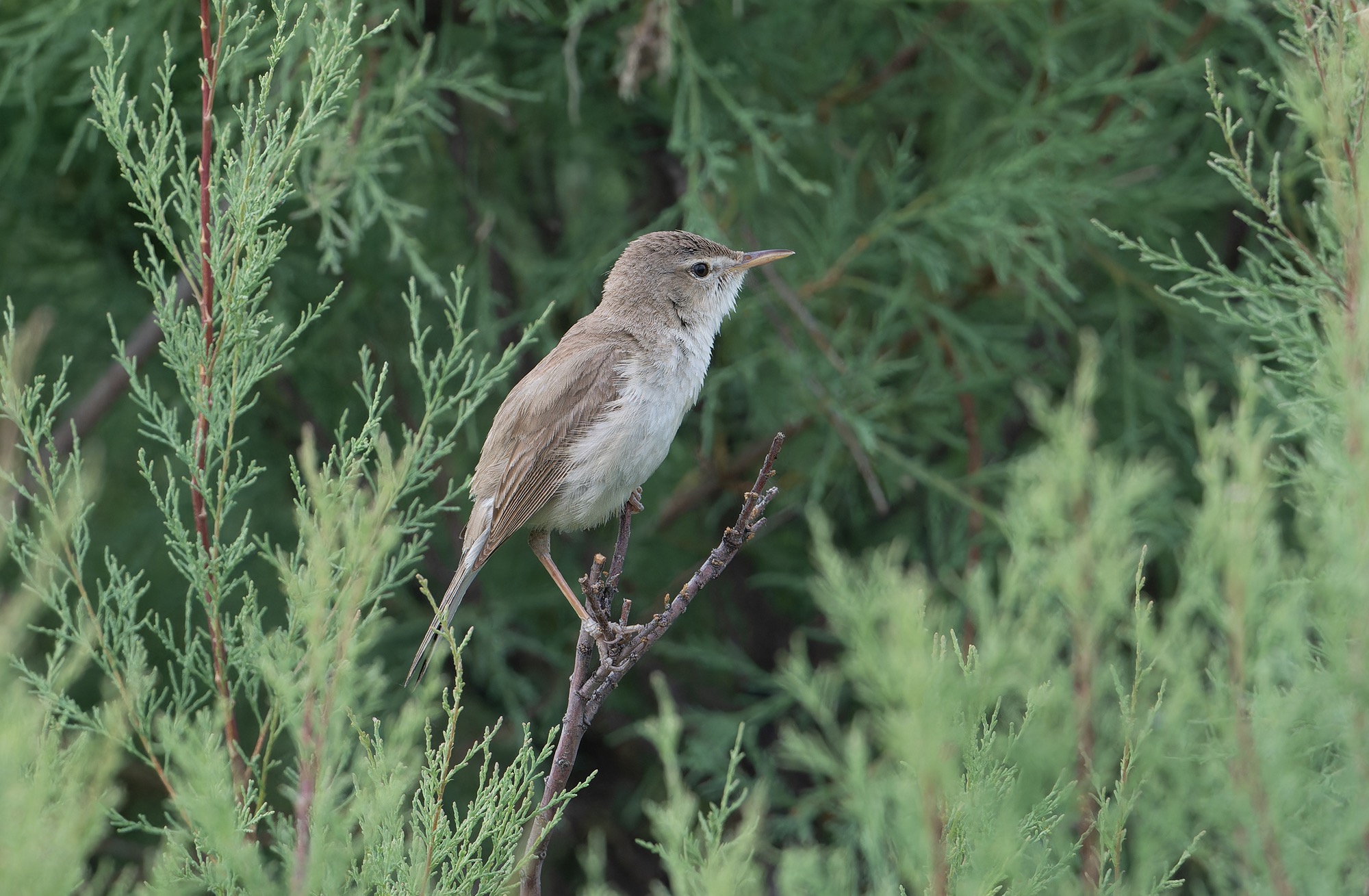
Left our lovely hotel in Atyrau after a 5am breakfast and began the 180kms drive to Inderbor and our next motel for the night. Driving up the west bank highway we found the road to be in poor shape with numerous potholes, lumps & bumps. Our first stop was superb with several singing Red-headed Buntings on show and we spent a nice period of time getting better & better views. We were hoping for Booted Warbler in the same area but could ‘only’ come up with 1 or 2 Sykes’s Warblers, although one of these showed much better than yesterday’s sampling and an Eastern Olivaceous Warbler was also seen, along with a few Pied Wheatears, Lesser Grey Shrike, more Calandra Larks, and Eurasian Hoopoe. Continuing the drive, we saw Black Kite, Long-legged Buzzard, European Bee-eaters, and Eurasian Hobby. Another stop beside a lake had us scoping real wild Mute Swans, and there was also a distant White-tailed Eagle, 3 Blue-cheeked Bee-eaters, European Roller, Sedge Warbler, Bluethroat and another Red-headed Bunting.
Once we’d finished a really high quality lunch in Inderbor we headed a short distance out into the steppe to a series of lakes, finding White-winged Larks reasonably common. And what stunning birds they are! Other species noted include Red-crested Pochard, Great White Egret, Wood & Green Sandpipers, 23 Pallas's Gulls, several Common Terns, Common Swifts, 6 Turkestan Short-toed Larks, 3 Rose-coloured Starlings, Northern, Isabelline & Pied Wheatears, and possibly best of all, a flyby Red-footed Falcon. So, not a bad day at all...!


DAY 3: INDERBOR - DZHANGALA

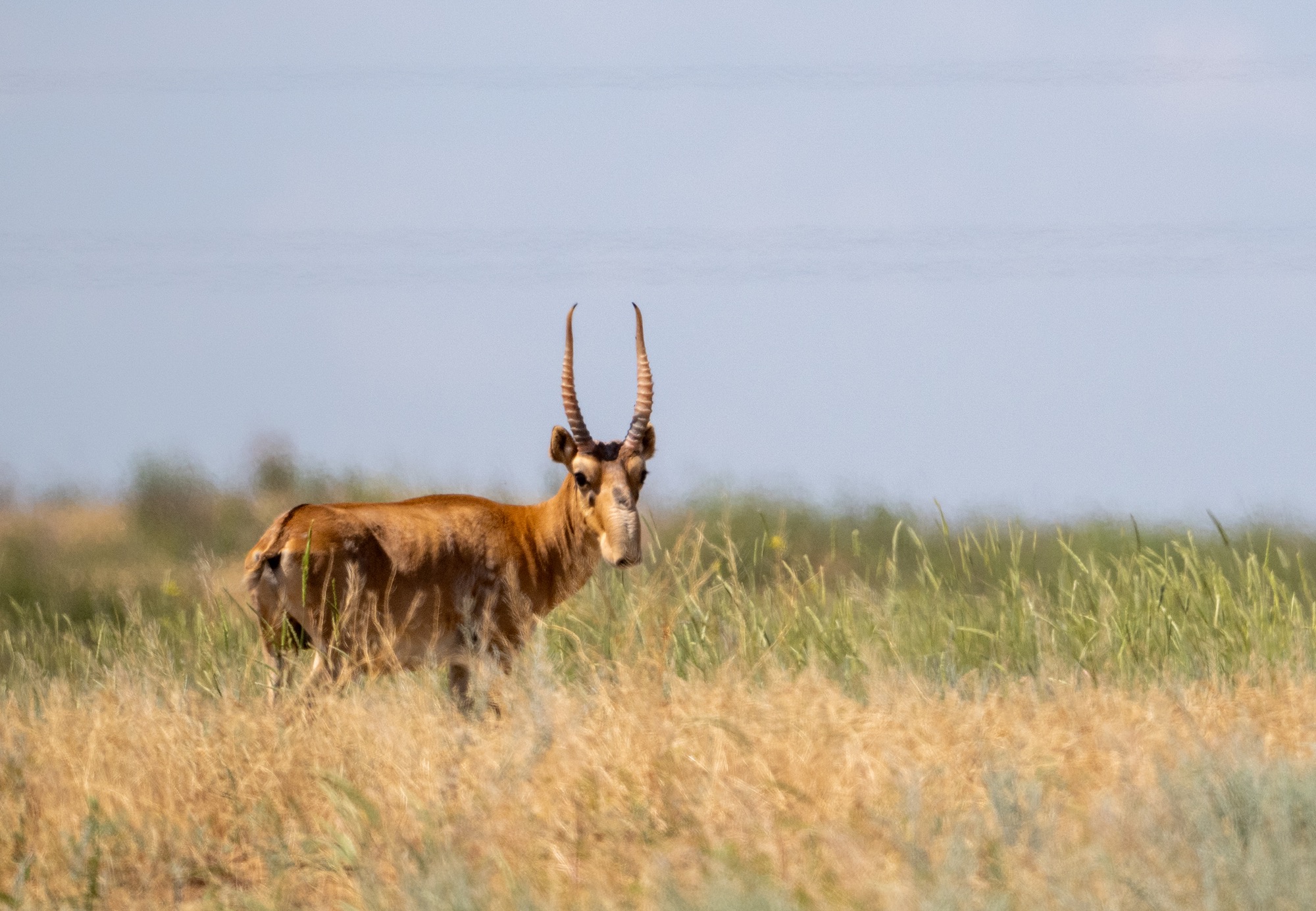
We ate at the café next door to the hotel before leaving around 6am for the long drive north in a trio of 4WD cars. Our first stop gave us Paddyfield and Great Reed Warblers. But our main target today was Black Lark, and after a bit of a run around chasing a couple of flyovers we were eventually rewarded with perched views of this bird (see photo on right) right beside our vehicles. We enjoyed several more displaying males but found it extremely difficult to locate them when they went to ground. This journey was also notable for some putative Booted Warblers that at the time looked very good for this species, as they seemed to be breeding in low bushes and very atypical to the breeding areas for Sykes's Warbler. However, after checking our photos they proved to be 'just' Sykes's Warblers. During this time we also had 3 Gull-billed Terns, and a fine Pallid Harrier. Our road was more of a sandy track for many hours as we continued north, during which time we continued to see a sprinkling of Black Larks flying over, but what was truly amazing were the numbers of Saiga Antelopes in this area of steppe. I mean we estimated an unheard of total of something like 650 Saiga during our journey!!! Other good sightings included Steppe Eagle, several Montagu's Harriers, Black-bellied Sandgrouse, and more White-winged Larks. Before reaching Dzhangala we diverted off the route to look for Demoiselle Crane and a few sites they had been present in previous years, but the steppe was particularly dry and we never discovered any greener areas that this species relies on to breed in.
So we reached our homestay and base for the next couple of nights around 5pm, and after settling in a few of us headed out to a nearby park. Meanwhile we were unaware of a little confusion back at the digs when the local constabulary turned up to see what these weird westerners were doing and put under house arrest for a while until they were happy we were not a danger to the local community! This was the time that we discovered a very odd-looking shrike, with it looking like a potential Long-tailed Shrike. Hurried WhatsApp messages ensued to the guys back at the digs and directions given. Amidst all of the excitement, the shrike disappeared, only to reappear nearby a little later. With better and better views and eventually everyone assembled it became apparent we were looking at a hybrid pair of shrikes. The male being a Turkestan x Red-backed Shrike cross and the female more of a pure Turkestan Shrike. A very educational experience indeed!


DAY 4: DZHANGALA STEPPE & LAKE REGION

Our day to look for Demoiselle Crane that took 12 hours of hard driving across the steppe until we connected. But we enjoyed great birding all day around the lakes and we saw a few more Sykes’s Warblers early on and enjoyed fantastic close views. At a spot that looked (subjectively) promising for the ultimate long-shot prize of West Kazakhstan, Pallas's Sandgrouse we actually spent quite a while scanning. A pair of Terek Sandpipers were something of a surprise, as was a Short-toed Eagle. This was a very busy spot with Dalmatian Pelicans flying over, a variety of shorebirds and gulls & terns, Blue-cheeked Bee-eater, Western Yellow Wagtails (feldegg), more Red-headed Buntings, and quite a few common trip padders too. There were several lakes to check and we were continuously on the lookout for cranes and as the day progressed it was not looking good as they just didn't seem to be around. Over at Kosher Lakes we initially notched up 3 White-headed Ducks, Great Crested Grebe, 3 Glossy Ibis, Purple Heron, Western Marsh Harrier, and Great Reed Warbler amongst others. Moving around to the other side there were Red-crested Pochards, stilts, several Green Sandpipers, Little, Gull-billed, Whiskered & Black Terns, Eurasian Spoonbill and a Savi's Warbler. We then found 3 White-tailed Lapwings, 22 Garganey, and spent some time watching a colony of 30+ Black-winged Pratincoles.
Our search continued across the steppe and over into the afternoon, with a fine Eastern Imperial Eagle next up. Plenty of commoner species were always present around the lakes, and a Little Gull was a surprise find. A total of 47 species were seen at this latest lake, and included 9 Little Stints, more Pallas's Gulls, terns, 17 Black-necked Grebes, 8 Dalmatian Pelicans, White-tailed Eagle, and both Blue-cheeked & European Bee-eaters. The sheer numbers of larks in the steppe was phenomenal and we saw so many White-winged Larks at numerous locations, along with a plentiful supply of Calandra & Turkestan Short-toeds as well.
Eventually, in the late afternoon around 6pm we hit jackpot with the much-wanted Demoiselle Crane. I think there was a huge slice of luck involved as most of us had fallen asleep and it was left to our trusty coach driver to pick a route across the never-ending steppe back towards Dzhangala. As we neared a good looking green area complete with a stream, Boris called a halt for us to scan. I dreamily woke up and more out of habit rather than any optimism raised my bins and looked off into the distance. And there it was! I casually and rather called "Demoiselle Crane" and then the chaos of hastily given directions followed. What a joyous result this was, as we'd all practically given up on this species after such a long day! So it was with much good humour we returned to the homestay and time to celebrate!


DAY 5: DZHANGALA STEPPE & LAKE REGION

We had the morning to explore some of the nearby lakes, and we had already decided to revisit the marsh where we saw the close Black-winged Pratincoles yesterday. Well, what a good decision this proved to be. The pratincoles were here of course, as was 2 pairs of White-tailed Lapwings, but what struck us immediately upon arrival was the sheer numbers of Bearded Reedlings present. The reedbed was alive with them first of all we counted around 30, then 40 and then the count went up to 60. There were more and more groups literally falling out of the sky and we estimated well over 150 by the time we had left the site. They were even lining up like swallows on the telegraph wires! A nice couple of male Citrine Wagtails were found, along with a fine Eurasian Bittern, and we scoped a Savi’s Warbler singing away from the top of a tall reed stem, and a cracking leucocephala Western Yellow Wagtail found by the ever impressive Mr McCloskey. There were plenty of other birds seen, with Water Rail, Glossy Ibis flying over, Black Terns etc etc. In fact this was the best site birded on the entire tour with an impressive 50 species seen. We then drove around to the other side and had some Caspian Reed Warblers with their pale rumps noticeable when they flew, and 4 Eurasian Spoonbills flying over.
Then we drove over to Lake Sorkol, passing Dzhangala Park where a pair of Eurasian Hobbies gave outstanding views. Once at this vast lake our first stop gave us 2 Red-necked Phalaropes, a breeding plumaged Ruff, and a few more Dalmatian Pelicans. Driving around the lake we came across a flock of orientalis Eurasian Curlews, and with them were 2 Eurasian Whimbrels. When the flock took flight the white underwing of the whimbrel had Brian thinking that this could be the rare subspecies Steppe Whimbrel (ssp alboaxillaris), a species thought extinct in 2014 and rediscovered on its wintering ground in Mozambique a few years later. With very few records since then (and all of them on wintering grounds in Zanzibar, Mozambique and Madagascar) further examination of photos led us to believe our identification was correct and this may well be the first record of this species close to its breeding grounds…. So we spent quite some time trying to obtain conclusive photos...
After lunch back at the homestay we said our goodbyes to our wonderful hosts and drove the 5 hours to Inderbor on a pot-holed tarmac road, passing through several small narrow strips of woodland in the steppe. These were home to many colonies of Rooks, along with many Red-footed Falcons that were utilising the old nests. We also saw a couple nests of Steppe Eagles close to the road as well and in hindsight this area warranted further investigation. We also made a short stop along the Ural River to explore some fantastic looking riverine woodland but were hit by a thunderstorm so had to leave, only recording the only Common Chaffinch of the trip!

DAY 6: DZHANGALA - INDERBOR

Having done incredibly well on this tour, this felt like a spare day, so we spent most of it exploring some riverine woodland, as always with high hopes of turning up something good. Probably, no-one has birded these areas and we were full of expectation and this proved rather justifiable as a pair of Levant Sparrowhawks circling overhead. We managed a few quick photos as I don’t remember seeing many eBird reports of this species in the area. And that was the highlight of our day, although we did add Grey Partridge, Common Redstart & Common Chiffchaff to our trip list and saw a brief Eurasian Penduline Tit and scoped a Black-bellied Sandgrouse on our way out. We stuck at it and searched further afield but couldn’t produce anything else, so in the mid afternoon heat decided to head out on the 3 hour drive along a decent road back to Atyrau, where we diverted to the shores of the Ural River in the city to check out a site but that proved to be a waste of time!


DAY 7: ATYRAU DELTA

With all of our realistic major targets seen we were hopeful of finding Black-headed Penduline Tit and headed towards the Natural Reserve. Well, the so-called delta turned out to be a dry, dusty desert and all of the accessible reedbeds had been cut! Still, the narrow strip of vegetation and reeds along the channel at the entrance held both the caspius subspecies of Eurasian Penduline Tit and also the nominate form at another location seemingly paired with a caspius…..
Yet this has proven to be no ordinary tour and one last fitting & rather extraordinary observation was yet to come our way. Can you believe a small group of 8 Pallas’s Sandgrouse flew over heading to who knows where. But they headed right on to our Western Palearctic lists. This is an extraordinary sighting and in WP terms is big news! We look forward to getting them on the deck next year!
Lunch was taken back at our nice hotel in Atyrau and a few hardy souls ventured out to Victory Park and added European Greenfinch and Spotted Flycatcher to our pretty spectacular list. And that is the end of our magical ride in western Kazakhstan. I have to say this was such a brilliant tour to lead, with an amazingly knowledgeable group of experienced birders, a non-stop raucous ride full of laughs and the best craic ever! We hit all of our targets and I would like to thank our guide Boris for his excellent logistics, organisation and good humour. Maybe we will all meet again in northern Saudi one day for more Western Palearctic megas..?!
All that remained was for our group to transfer to Atyrau Airport the following morning and fly home to Denmark, UK and Ireland, whilst I continued on to Azerbaijan.....
Good birding!
Nick Bray


