ICELAND IN SUMMER
DAY 1 ARRIVAL IN REYKJAVIK
Once everyone has assembled at Reykjavík-Keflavík International Airport, we will drive to our first hotel near Snæfellsnes Peninsula where we will spend the first two nights.
DAY 2 SNAEFELLSNES PENINSULA
We will spend the whole day birding around the western headland of the Snæfellsnes Peninsula, which is a wonderful area, and we will have fun exploring the various birding spots here. Some pools near our accommodation are likely to have breeding Greylag Goose, Whooper Swan, Red-throated Loon (Diver), Arctic Tern, Red-breasted Merganser, Tufted Duck, and Common Eider. At this time of year there is also the ever-present sound of displaying shorebirds chipping and buzzing away overhead and these are likely to include Common Snipe, Common Redshank, and Eurasian Oystercatcher.
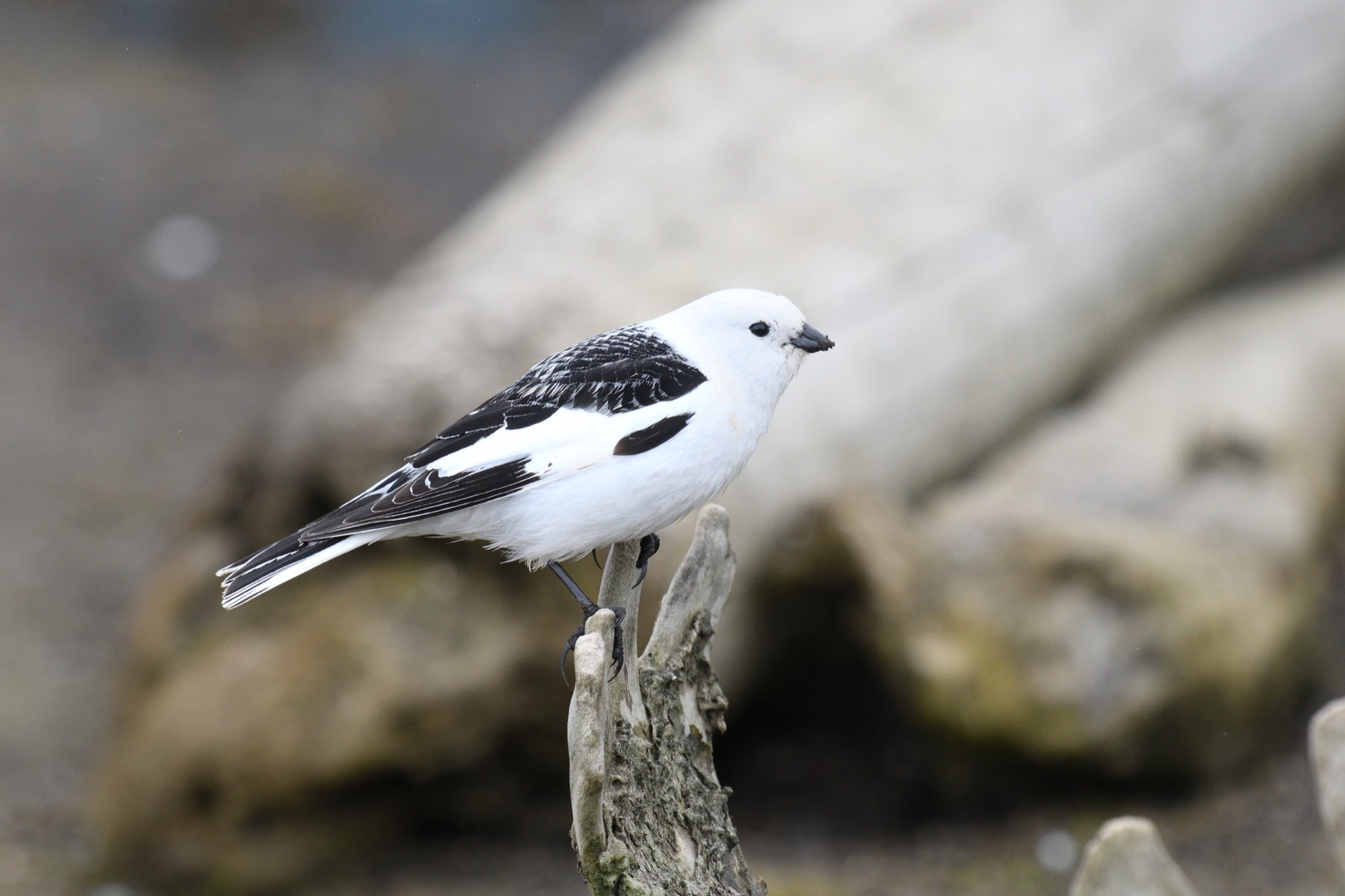
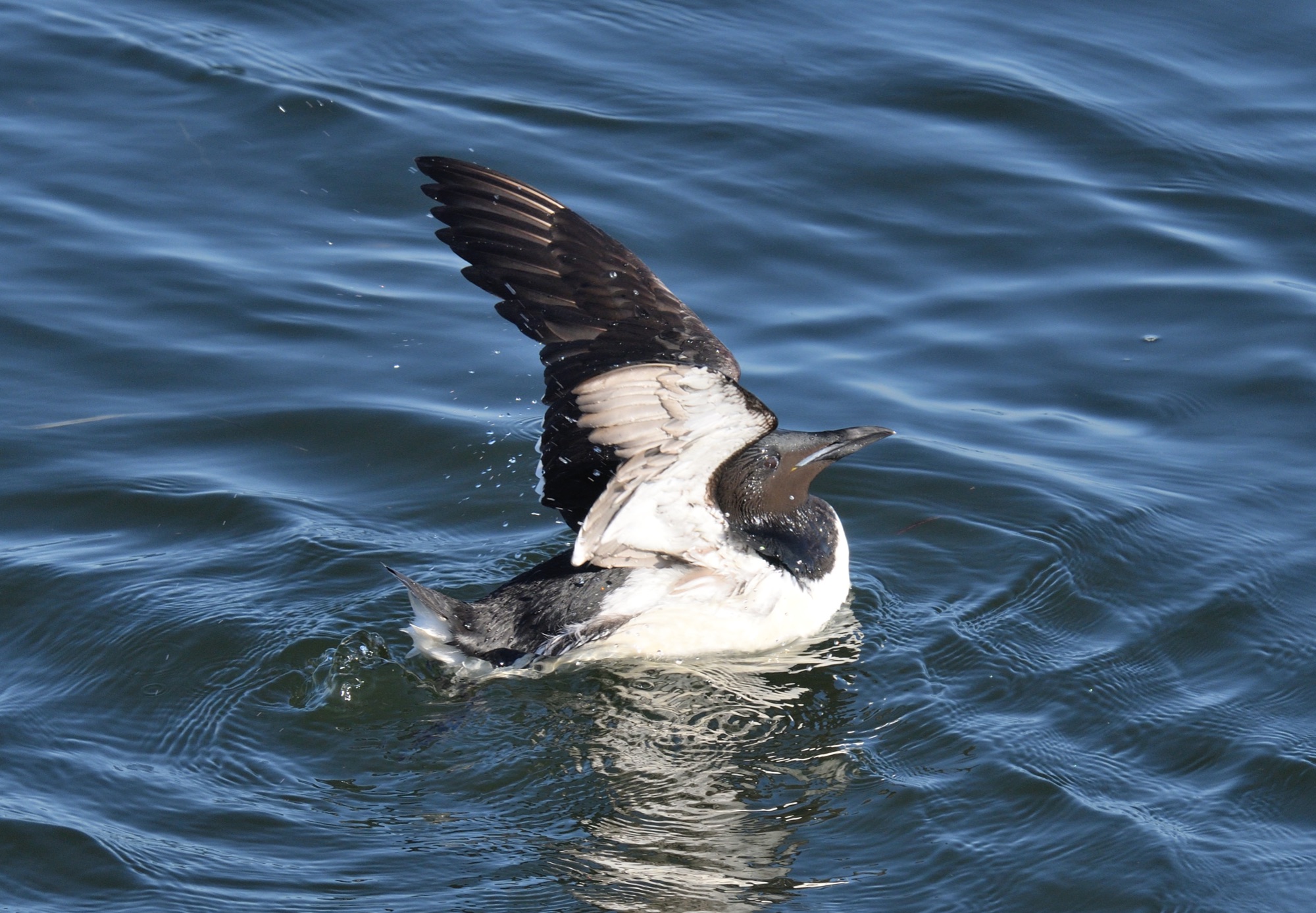
We will have our first look at the amazing sea cliffs, where we will observe the seabird breeding colonies as we locate Thick-billed Murre (Brünnich’s Guillemot) among the large number of Common Murre (Common Guillemot), Razorbill, European Shag, and Black-legged Kittiwake. This site offers a fascinating experience, and we are sure of some great views. It is worth noting that the Rock Doves here are wild, ‘real’ ones, not just their feral cousins! While on the land above the cliffs, we have a good chance of finding Rock Ptarmigan, Northern Wheatear, Snow Bunting, and Merlin
Small harbors on the peninsula may contain Red Knot, Purple Sandpiper, Black Guillemot, Glaucous Gull, European Herring Gull, and Common Eider, though one of the main highlights here will undoubtedly be if we find the simply breathtaking Harlequin Duck. This species must rate as one of the best-looking ducks in the world, though there is some great competition across the world, and several other contenders on this tour…
Overnight: Olafsvik, Snæfellsnes Peninsula
DAY 3 FLATEY ISLAND - BREIDAVIK
We will have an early start and drive across to Stykkisshólmur to catch the morning ferry to Flatey Island. Flatey Island is considered one of the most picturesque and scenically beautiful places in Iceland, and as soon as we arrive you will see why.
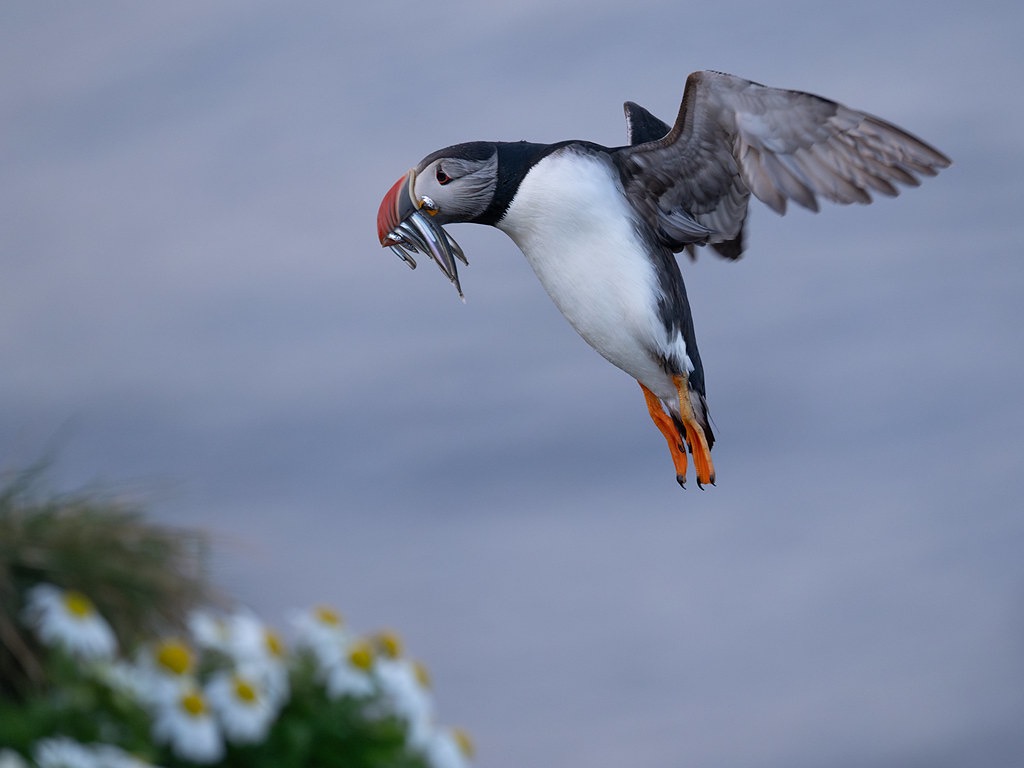
Around the docks at Stykkisshólmur we should see plenty of Common Eider, Arctic Tern, Common Murre (Guillemot), Atlantic Puffin, and loads of larids like Glaucous Gull, Great Black-backed Gull, Black-headed Gull, and European Herring Gull, plus plenty of Black-legged Kittiwakes. From the ferry we have a chance for Manx Shearwater, Northern Gannet and Parasitic Jaeger (Arctic Skua), though at this time of year they are just as likely to be seen cruising over fields as they are over the sea!
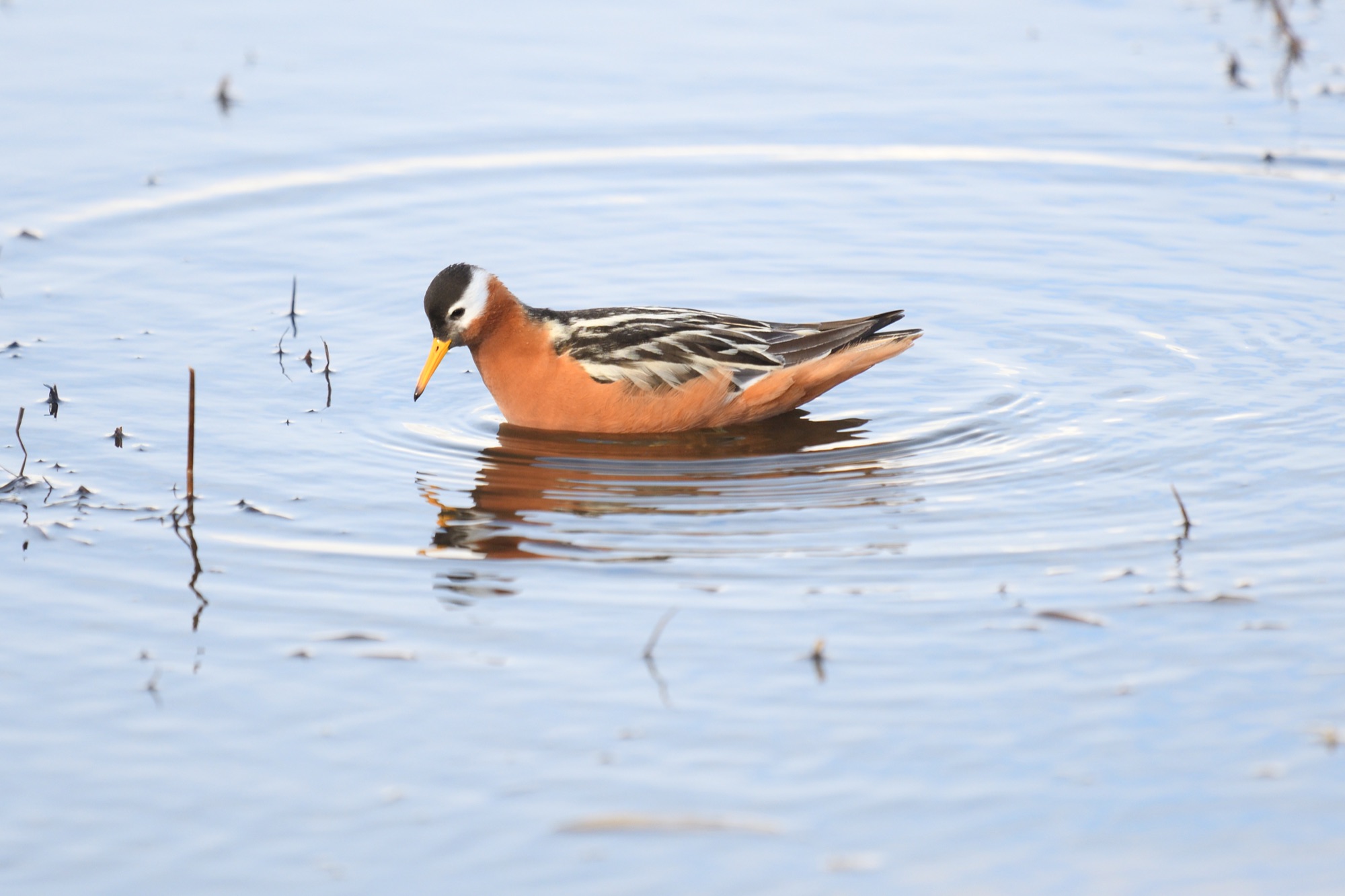
When we arrive at Flatey Island we will have the chance to look around for our main target, Red (Grey)Phalarope. This is one of the few places they breed in Iceland, and although the breeding area is closed during the breeding season, there is still a good chance to find them in the local area. Flatey Island also provides us with the opportunity to see the much more common and widespread, Red-necked Phalarope plus other shorebirds like European Golden Plover, Ruddy Turnstone, Common Snipe, Dunlin, and Common Ringed Plover. This area is also great for Snow Bunting and Meadow Pipit.
From Flatey Island we will catch the afternoon ferry to Breiðafjörður and drive to Breiðavík for the night. For those keen on an evening birding session (it does not really get dark here at this time of year!) we can visit the seabird colony at Látrabjarg. Our accommodation is set in the most fantastic scenery you could imagine and is a real treat.
Overnight: Breiðavík
DAYS 4 Látrabjarg and Blönduós
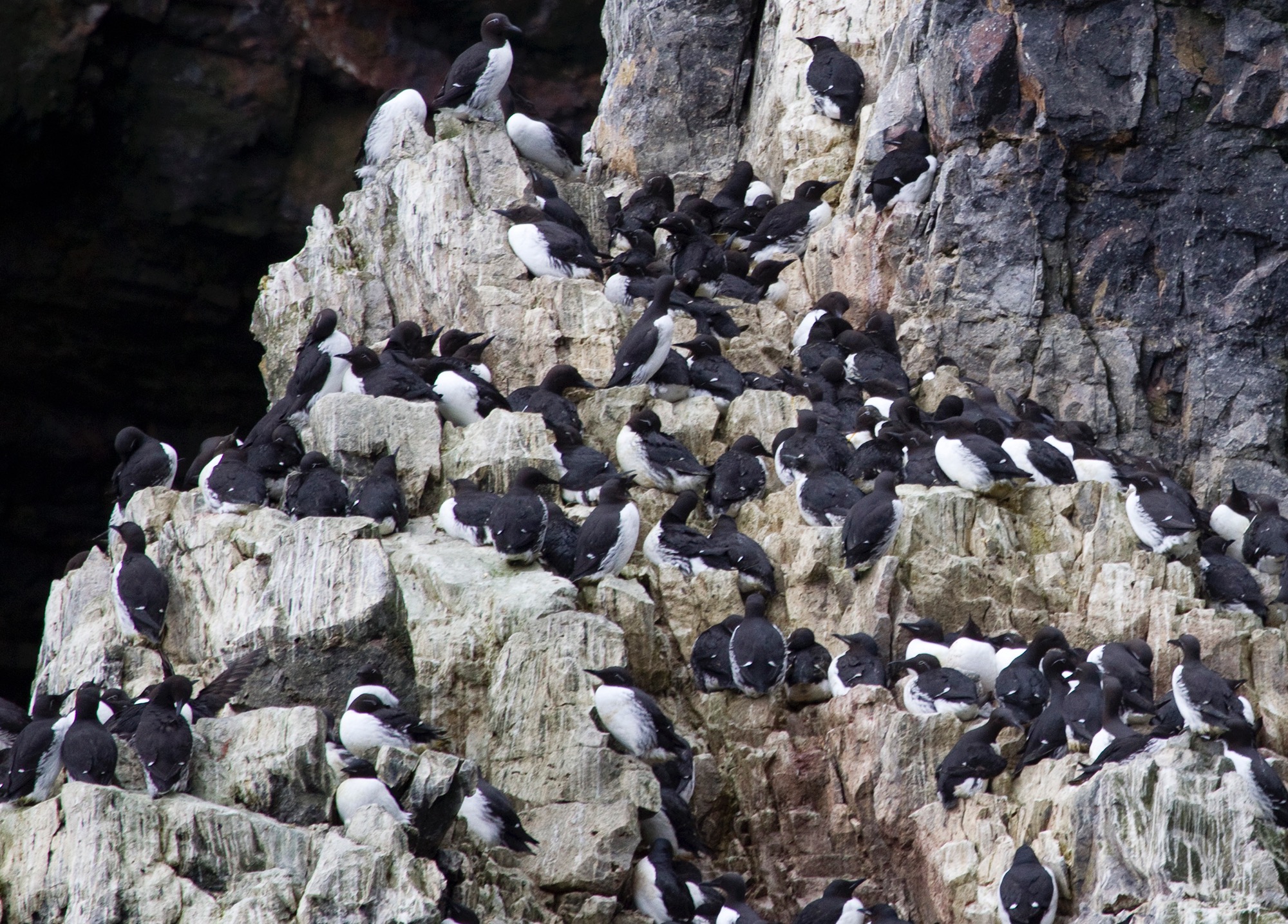
Today we will visit the amazing Látrabjarg, the famous bird cliffs. Here thousands of breeding seabirds mass along the cliffs, creating a huge racket as they jostle for position along the cliff face. Huge numbers of Common Murre (Guillemot) and to a lesser extent Thick-billed Murre (Brünnich’s Guillemot) and Razorbill breed alongside Black-legged Kittiwake and Black Guillemot. Glaucous Gull, European Shag, and Great Cormorantalso squeeze in here among their noisy neighbors while Arctic Foxes can sometimes be found nearby looking for an easy snack.
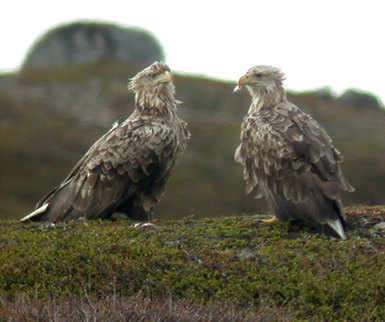
Once we have taken in this spectacle, we will head for Blönduós. However, there will be the need for plenty of stops along the way, not least to check for breeding Gyrfalcon and White-tailed Eagle that can sometimes be found along the route, along with Harlequin Duck, Common Loon (Great Northern Diver), and Purple Sandpiper.
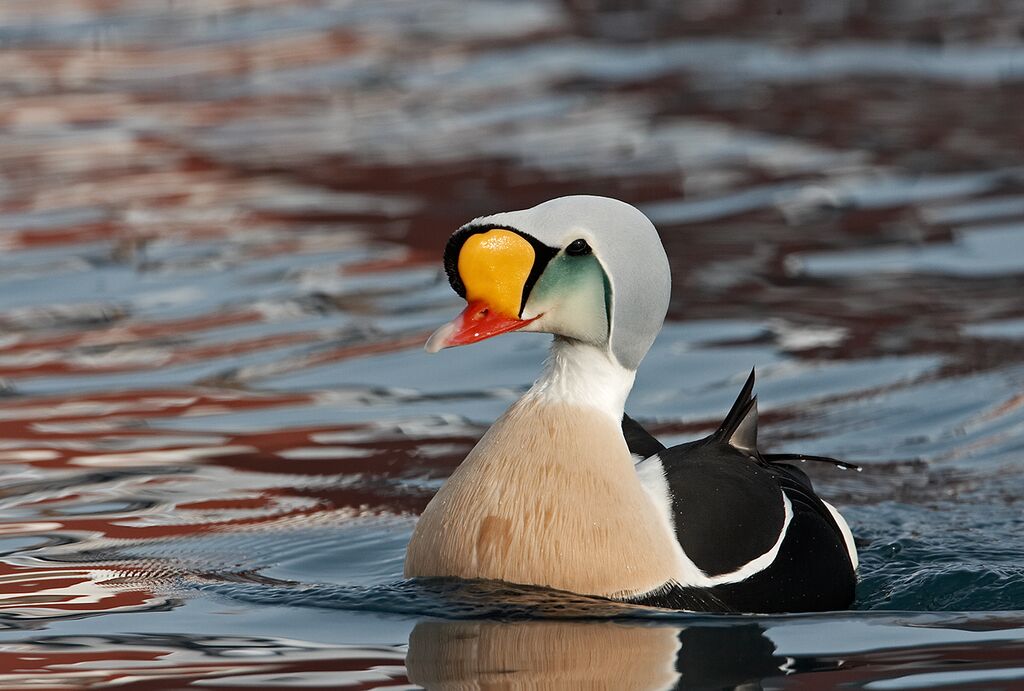
Blönduós is the halfway point of our journey eastwards. Blönduós River and Blönduós Bay both provide some great birding, with species like Common Eider and sometimes King Eider, Red-breasted Merganser, and Red-throated Loon (Diver) seen around here, along with Northern Wheatear, Meadow Pipit, White Wagtail, Dunlin,Eurasian Oystercatcher, European Golden Plover, Black-headed Gull, and Parasitic Jaeger (Arctic Skua).
Overnight: Blönduós
DAYS 5 - 6 Blönduós - Lake Mývatn - Húsavík
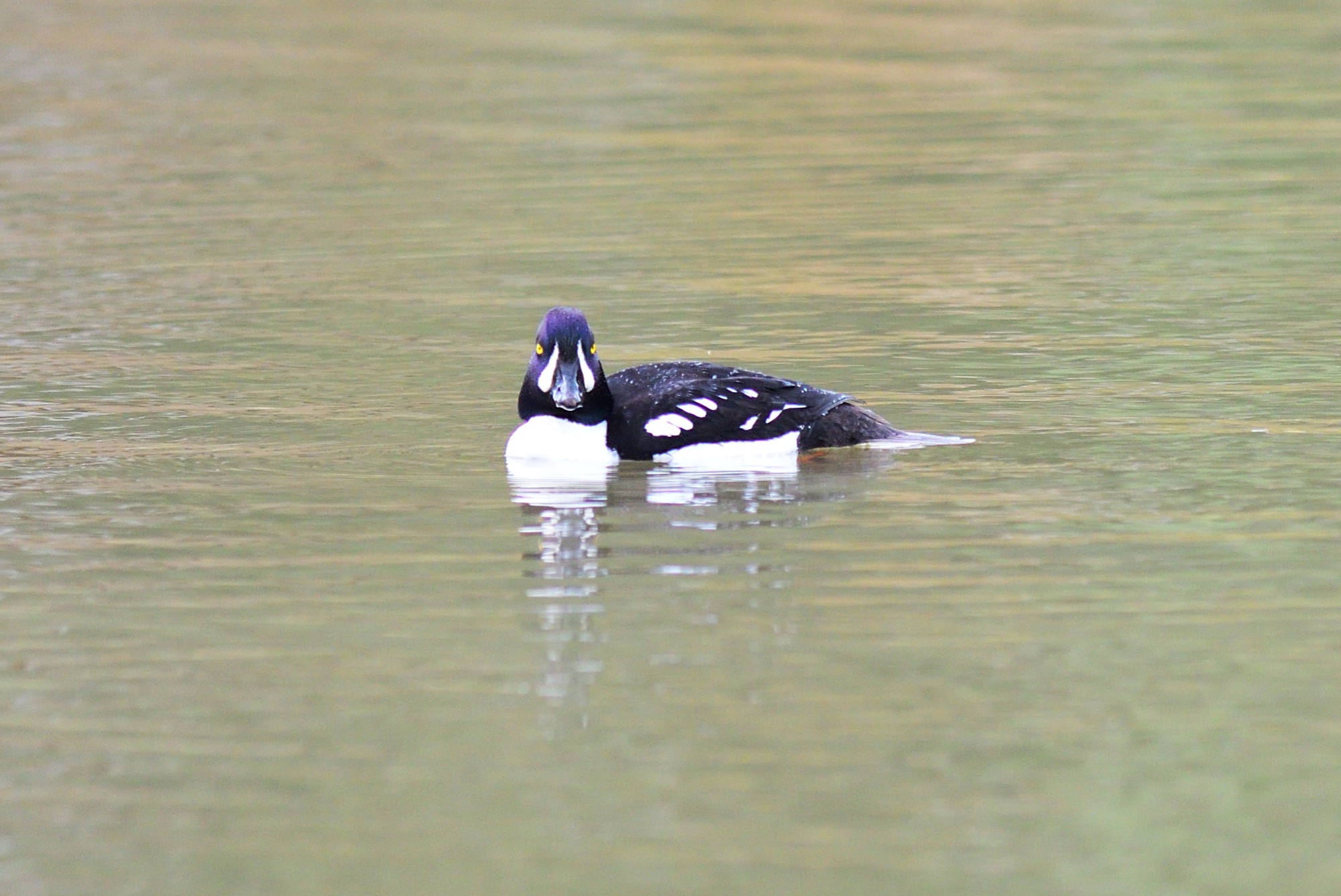
Today we will set off early and continue east to Lake Mývatn, our base for the next two nights. Along the way we will keep our eyes peeled for roadside Harlequin Duck and Pink-footed Goose. We will then spend the rest of the day exploring this wonderful lake that is packed full of breeding ducks.
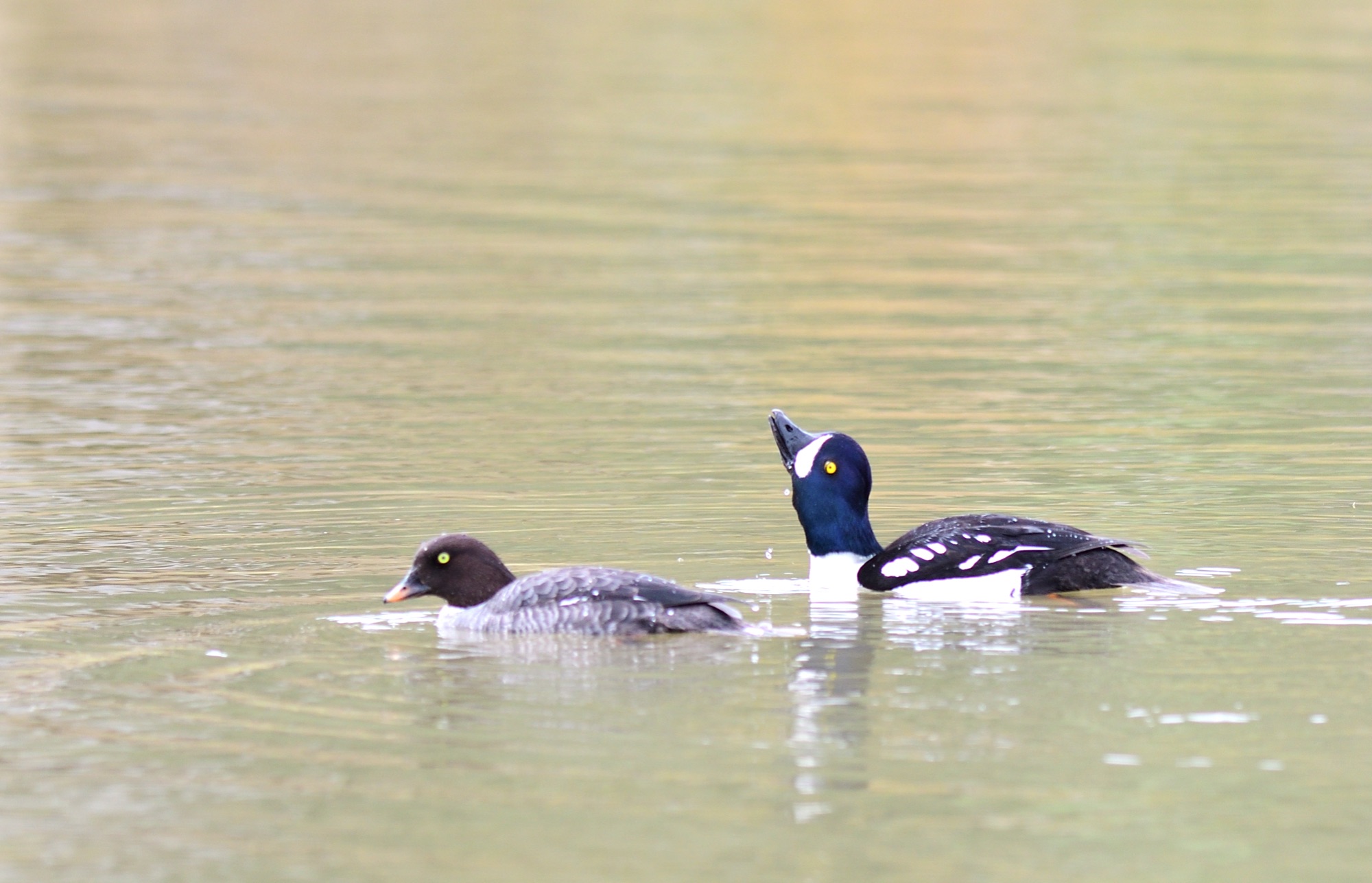
This is the center of duck habitat in Iceland and is a spectacular site. We will spend the day driving the 25 miles (40 kilometer) worth of road that circumnavigates the lake, making strategic stops in different areas preferred for different species. Over the course of the day, we will hope to find a wide range of species, including Greylag Goose, Whooper Swan, Gadwall, Barrow’s Goldeneye, Red-breasted Merganser, Eurasian Wigeon, Harlequin Duck, Northern Shoveler, Eurasian Teal, Long-tailed Duck, Greater Scaup, and Common Scoter
There is also a good chance for Common Loon (Great Northern Diver) and Red-throated Loon (Diver), Horned (Slavonian) Grebe, Short-eared Owl, Merlin, Parasitic Jaeger (Arctic Skua), Redwing, Common Redpoll, Black-tailed Godwit, Dunlin, European Golden Plover, Northern Wheatear, and the endemic subspecies of Eurasian Wren. As always, we will keep a lookout for Gyrfalcon which has become increasingly tricky to find in recent years.
The spectacle of hundreds of Red-necked Phalaropes is sure to impress while we are birding here, and it really is an incredible sight. It is also worth keeping an eye-open for vagrants; in recent years we have found vagrant American Wigeon, Lesser Scaup, and Ring-necked Duck on the lake!
Overnight: Mývatn
We will have the morning birding around Lake Mývatn, mopping up any species we may still be looking for, or just appreciating the species we saw the previous day – there is little better than watching a myriad of baby ducks and shorebirds at close range and being amazed at how enough of them survive to keep the population going. There is also nothing cuter than a baby Barrow’s Goldeneye, except maybe a baby Red-necked Phalarope!
In the afternoon we will head north for the rest of the day to the small harbor town of Húsavík, birding along the way. Our journey takes us through yet more spectacular scenery (this is true for every day of the tour in fact!) and we might find Harlequin Duck, Rock Ptarmigan, Parasitic Jaeger (Arctic Skua), or Short-eared Owl along the way.
On arrival at Húsavík we will take a whale watching tour into the bay. On the trip we could find Blue Whale, Humpback Whale, Killer Whale (Orca), White-sided Dolphin, and Harbor Seal. Here we will also have a chance to see plenty of Atlantic Puffins at another Flatey Island (no relation to the one we visit on Day 3!). There is also a massive Arctic Tern breeding colony here, plus Black Guillemot, Purple Sandpiper, Dunlin, Common Redshank, Red-necked Phalarope, and Snow Bunting. Great Skua and Parasitic Jaeger (Arctic Skua) are also found from the boat, and Long-tailed Duck, Common Scoter, and Common Eider are often seen here too.
After our boat trip we will bird some areas around the town – this is one of the best sites in Iceland to find an over-summering Iceland Gull among the European Herring Gulls and other larids. The setting also gives great photographic opportunities for birds like Arctic Tern and Northern Fulmar against a snow-capped mountain backdrop. A small lake should give us excellent views of Common Loon (Great Northern Diver) and Horned(Slavonian) Grebe as well as Black-tailed Godwit and Eurasian Whimbrel.
Overnight: Mývatn
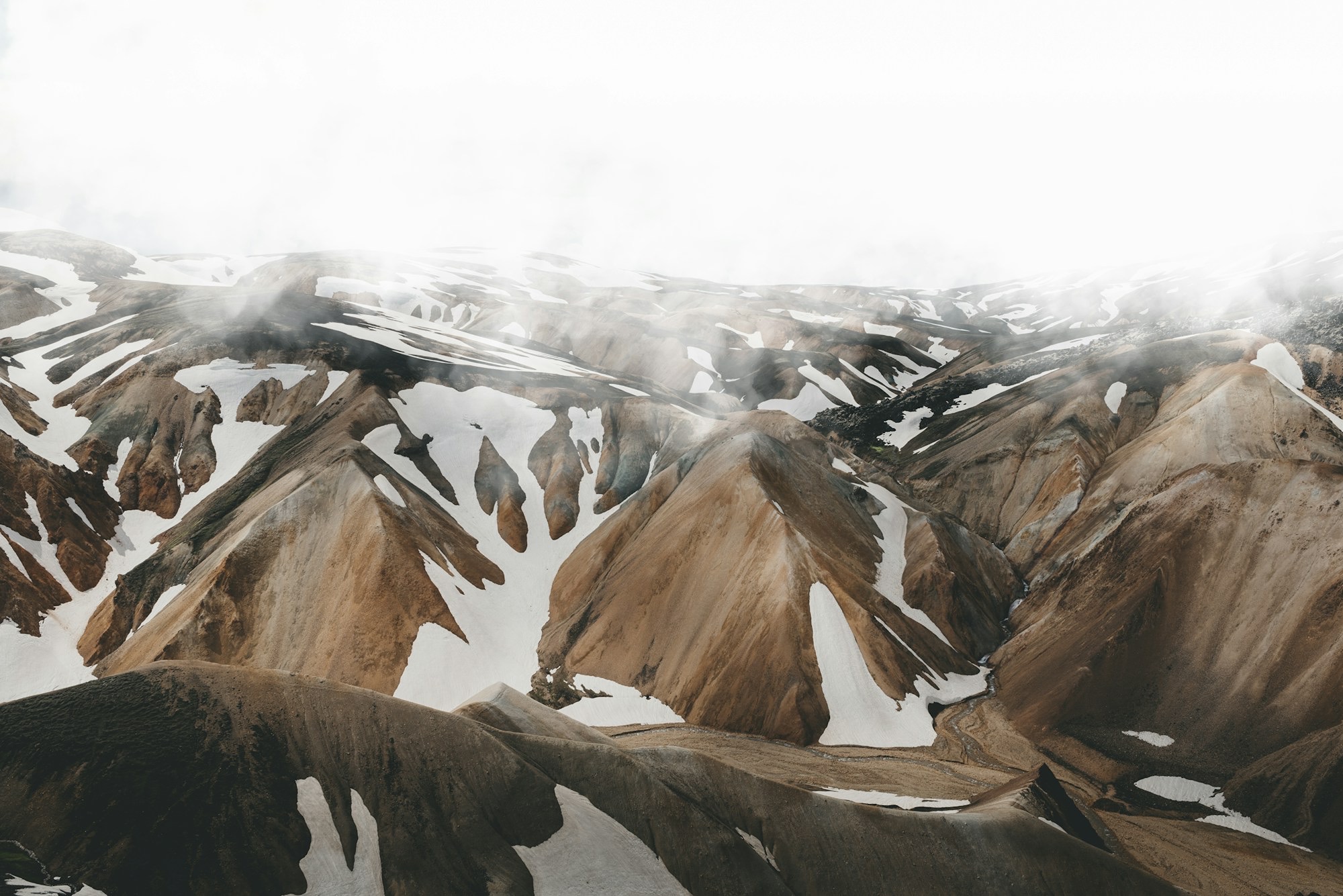
Lake Mývatn is famous for its breeding wildfowl, and we hope to catch up with a good number of species. Barrow’s Goldeneye and Harlequin are found amidst the tens of thousands of more familiar duck species, and potential trans-Atlantic vagrants. Slavonian Grebe and Great Northern Diver are also found here. We should see Gyrfalcon and Merlin in the area, too. Mývatn is also very important geologically, and we shall study the impressive landscape, sculpted by recent volcanic activity.
DAY 7 Lake Mývatn to Blönduós
We will spend a final morning around the wonderful Lake Mývatn, maybe trying to improve on our views and photographs of some of the area’s special species such as Barrow’s Goldeneye, Harlequin Duck, Red-throated Loon, and Red-necked Phalarope. We will also make sure that we have connected with all of the resident and migrant passerines that should be present during our time on the island, several of these can be found in the small, stunted woodland patches around the lake, and along our route over the next couple of days with some preferring the adjacent more-open spaces. Some of the targets will include Goldcrest (amazing how this, the smallest bird in Europe, can survive up here!), Eurasian Wren, Common Blackbird, Redwing, Northern Wheatear, Meadow Pipit, White Wagtail, Common Starling, Common (Icelandic) Redpoll, Red (Common) Crossbill, and Snow Bunting.
After lunch we will head back west towards Blönduós, where we will again spend the night to break up the journey back to Reykjavík/Keflavík. Again, we will be on the lookout for Harlequin Duck, Pink-footed Goose, Northern Raven, and Gyrfalcon along the way.
Overnight: Blönduós
DAY 8 Blönduós - REYKJAVIK
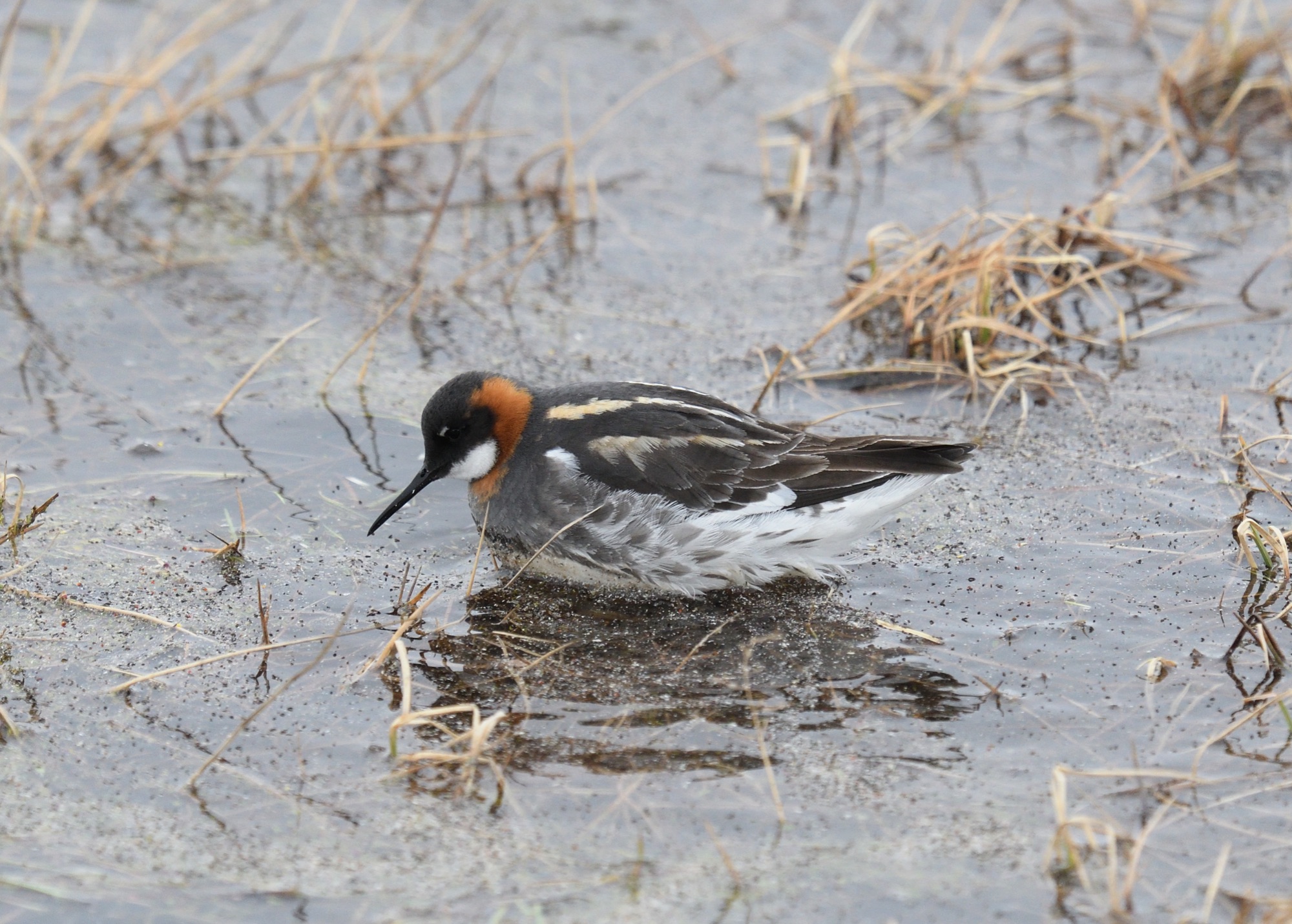
This morning we will continue our journey back to Keflavík. We will call in at a couple of spots for some birding along the way, such as estuaries that may contain a nice surprise such as a White-tailed Eagle, and if time permits, we can also visit Flói Nature Reserve. The reclaimed marsh/bog/estuary that exists here today is one of the best spots to see Red-throated Loon (Diver). It was saved by Fuglavernd (BirdLife Iceland), and is home to breeding shorebirds like Eurasian Whimbrel, Red-necked Phalarope, and Black-tailed Godwit, as well as to ducks like Common Merganser (Goosander), Red-breasted Merganser, Tufted Duck, Eurasian Wigeon, and Whooper Swan.
We will arrive in Keflavík in time for our farewell dinner and the tough assignment of choosing the “bird of the trip”, unsurprisingly it is never a straightforward or easy decision in Iceland!
Overnight: Keflavík
The majestic scenery of Snæfellsnes provides perfect introduction to Iceland and a remarkable backdrop for our first day in the field. Seabirds provide a focus, and we expect to find Brunnich’s Guillemot and other auks. In the afternoon we take a whale watching boat trip from Ólafsvík where we’ve a chance of Orca, White-beaked Dolphin, Humpback Whale and, if we’re lucky, Sperm Whale. The boat trip lasts three hours and is weather dependant. Waders are everywhere including the Icelandic race of Black-tailed Godwit, and we will get good views of Red-necked Phalarope and Glaucous Gull.
DAY 9 END OF TOUR
After breakfast we will transfer to the Keflavik Airport for return flights to UK/Europe and conclusion of the tour.