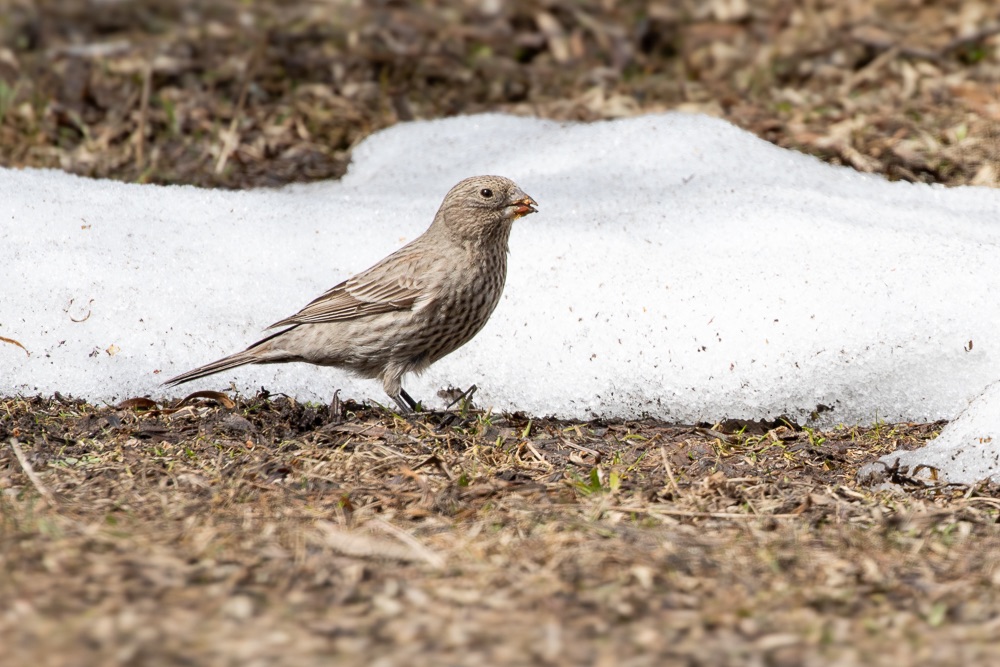
GEORGIA in WINTER BIRDING TOUR!
DAY 1 ARRIVAL IN TBILISI - 2nd February
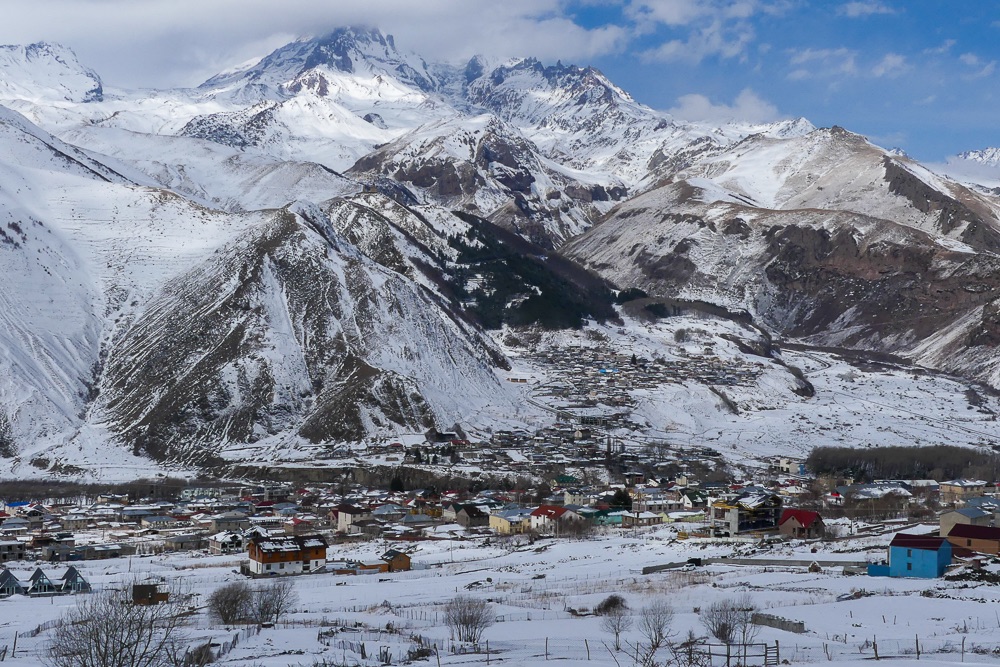
This is purely an arrival day into Tbilisi Airport, and no birding excursions are planned. There are direct flights from the UK arriving in the evening. Night in Tbilisi.
DAY 2 STEPANSTMINDA
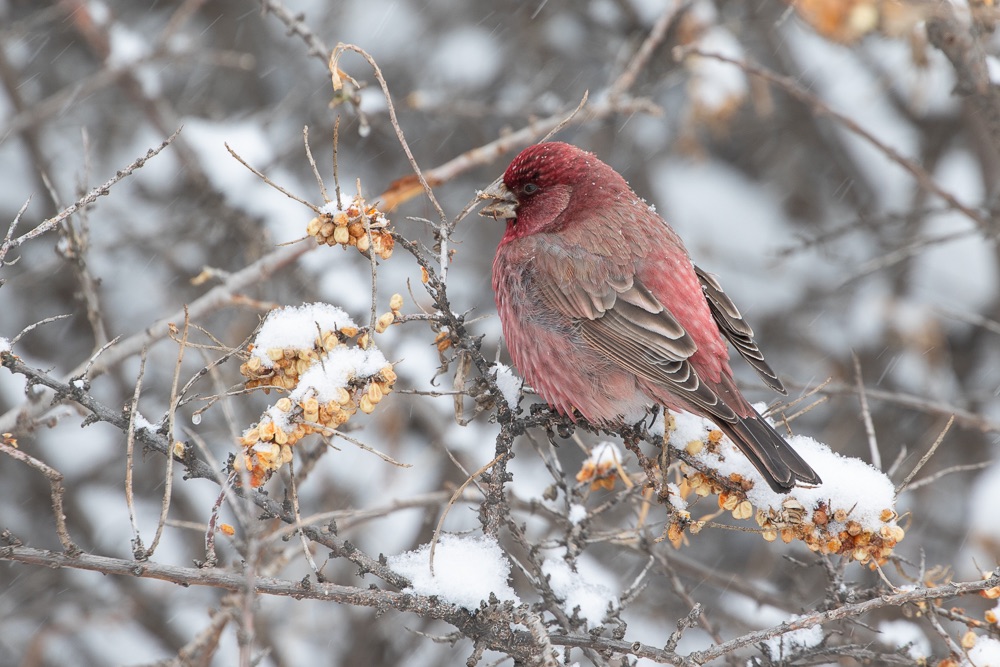
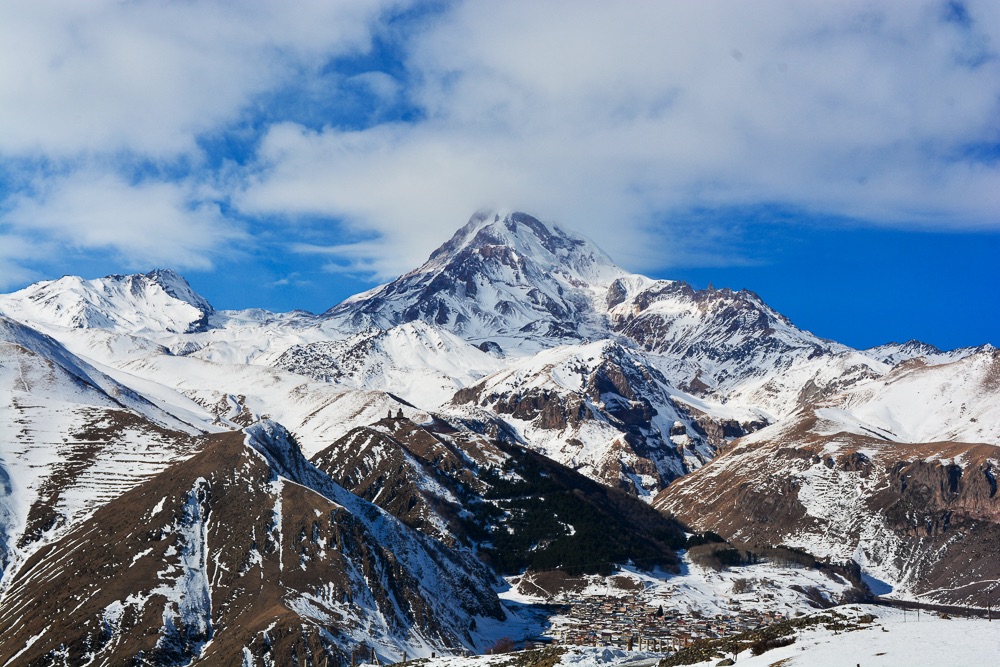
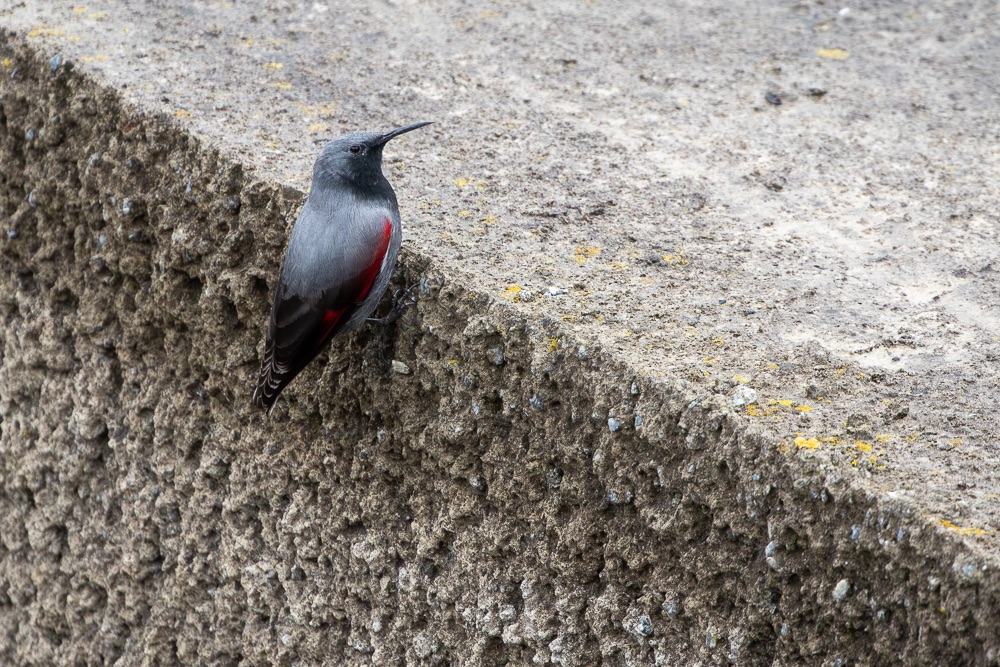
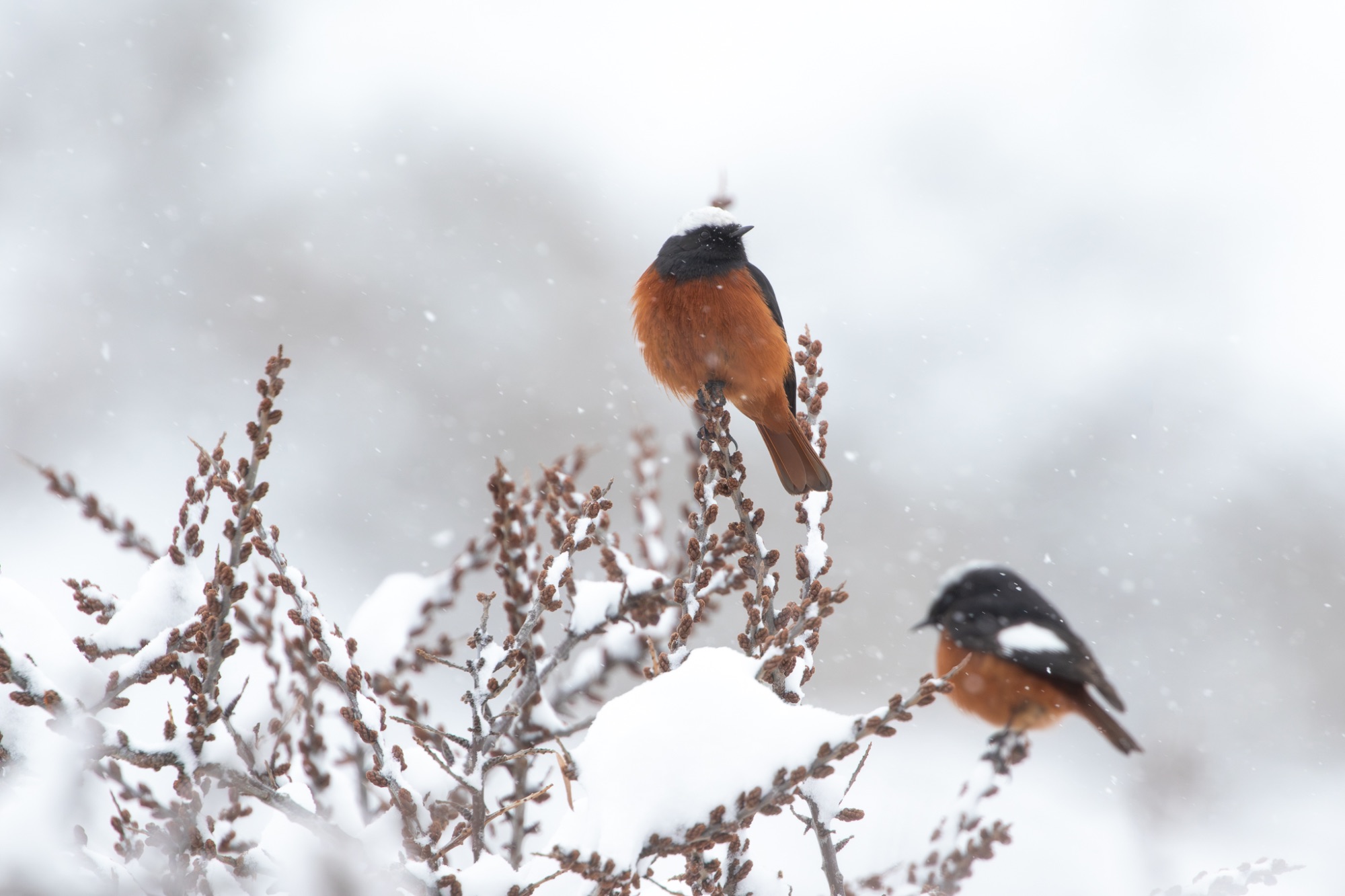
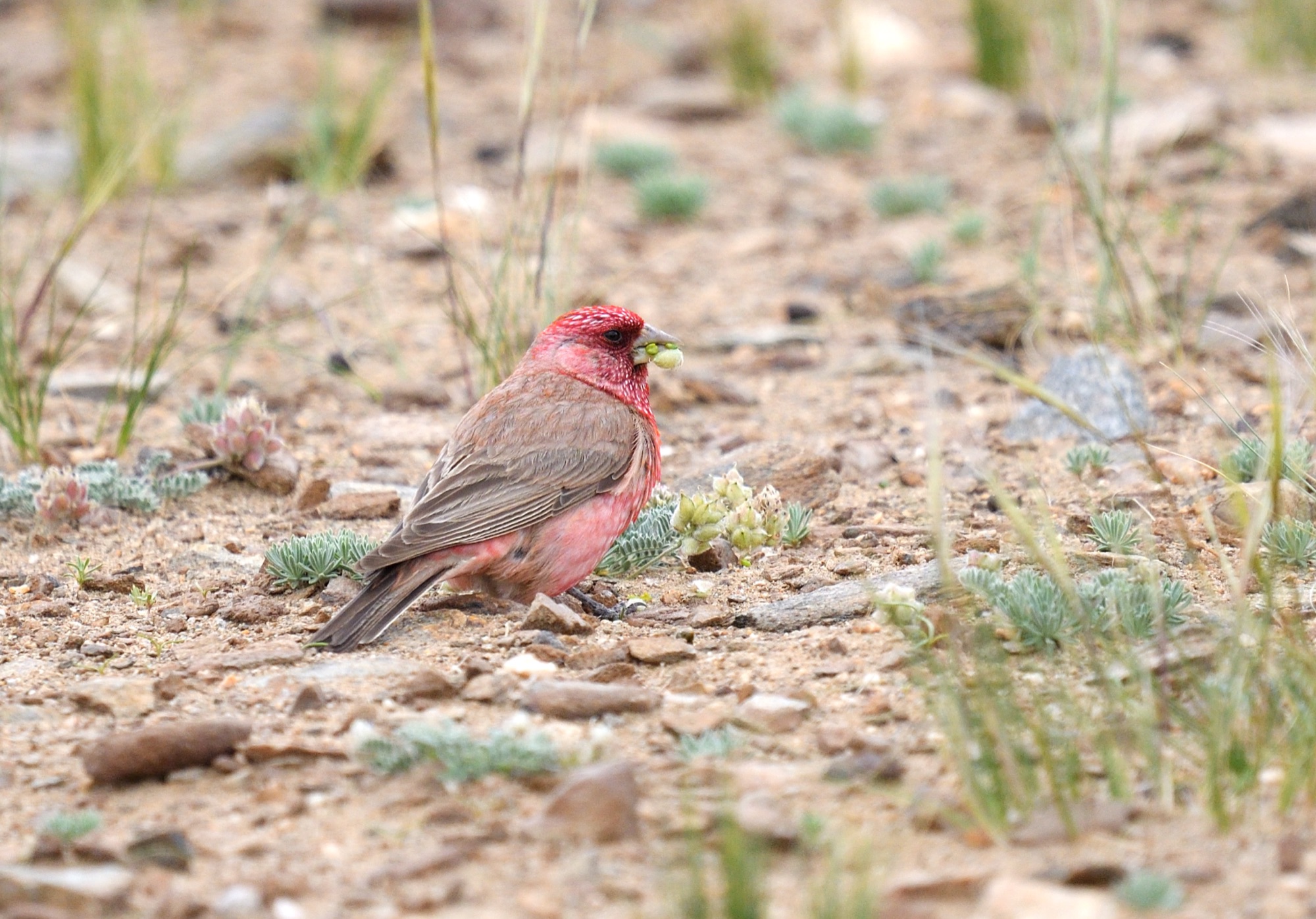
After breakfast, we head north to the mountain town of Stepantsminda (1,740 m) in the Greater Caucasus. Better known among international birders as Kazbegi, the town lies beneath Mount Kazbek (Mkinvartsveri), Georgia's third-highest peak at 5,047 meters, providing spectacular postcard-perfect scenery throughout our stay. The drive from Tbilisi normally takes about three hours, but with several planned birding stops, we expect the journey to last around four or five hours. Our first stop, after about an hour, is the historic Ananuri Fortress overlooking the Zhinvali Reservoir, where we will search for the magnificent Wallcreeper, a species that descends to lower elevations during winter. Although we hope to see more later in the tour, they are generally less reliable around Stepantsminda itself. Continuing along the famous Georgian Military Highway, once part of the Silk Road, we will stop at Jvari (Cross) Pass (2,379 m), if snow cover and traffic allow, where Horned Larks are often remarkably approachable on the snow-covered roadside. A further 35 minutes brings us to our hotel in Stepantsminda. After checking in and enjoying lunch, we will explore several sites in the nearby Terek River Valley, the winter refuge of two of the Caucasus' most sought-after birds: White-winged (Güldenstädt's) Redstart and Great Rosefinch. During winter these normally elusive species descend from their breeding grounds above 3,000 meters and gather in flocks around the abundant Sea Buckthorn shrubs, whose berries provide both food and shelter. This remarkable seasonal concentration gives us an exceptional opportunity to observe a large proportion of the local population - an event unique in the Caucasus and unknown elsewhere across the ranges inhabited by their Asian relatives.
The Sea Buckthorn thickets also support a rich variety of passerines, including Eurasian Bullfinch, Eurasian Blue Tit, Coal Tit, Long-tailed Tit, Rock Bunting, wintering Brambling, Twite, Common Linnet, Ring Ouzel, wintering Fieldfare and Redwing, and Mistle Thrush. Along the Terek River we will also search for Red-fronted Serin, while White-throated Dipper is usually seen well. Snow-covered boulder fields on the road to Gergeti Trinity Church often hold additional flocks of Horned Larks.
While enjoying the passerines, we will keep an eye on the sky for Golden Eagle, Bearded Vulture (Lammergeier) and Griffon Vulture, with the possibility of other migrating raptors as spring migration begins. Towards evening we drive just 10 minutes east of town to the upper Kuro Gorge, one of the most reliable sites for the endemic Caucasian Snowcock. Together with the Caucasian Grouse, our main target for the following morning, it is one of the true ornithological symbols of the Caucasus. A short walk to a viewpoint rewards us with excellent scanning positions over the rocky slopes, as well as magnificent mountain scenery. Night in Stepantsminda.
DAYS 3 - 4 KAZBEGI
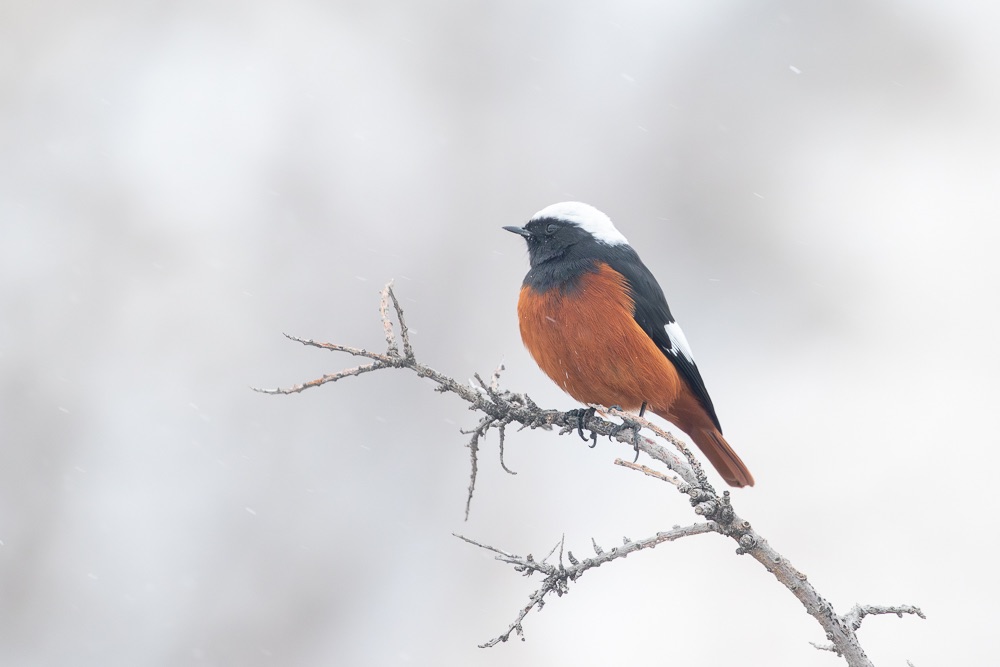
These two days begin with an early pre-breakfast excursion, although we will return to the hotel for a proper breakfast later. To keep everyone going, we will serve fresh coffee before going out. Our major destination in the morning is the Kuro Gorge, home to the endemic chickens. While Caucasian Snowcock favors the highest rocky slopes, the Caucasian Grouse prefers gentler mountainsides dotted with rhododendrons and scattered trees. The snow-covered slopes make the birds much easier to spot, and at this time of year they gather in flocks, allowing us to observe much of the local population – sometimes up to a hundred males, whose dark plumage stands out clearly against the snow. As we scan the slopes, we are also likely to encounter small groups of endemic East Caucasian Tur feeding through the snow. Red Fox is another regular sight here, while Grey Wolf and Lynx are always a realistic, if less predictable, possibility. The surrounding Sea Buckthorn thickets are alive with birds, including flocks of White-winged Redstarts and Great Rosefinches, together with many of yesterday's passerines. Early morning is also the best time to enjoy the spectacular gatherings of hundreds of Alpine Choughs. From here we continue to the upper Kuro Gorge for another opportunity to observe Caucasian Snowcock. At dawn these magnificent birds often stand on rocky ridges greeting the first sunlight, their piercing calls echoing across an otherwise silent mountain landscape – one of the most memorable experiences the Greater Caucasus has to offer.
After breakfast at the hotel, we will explore one of many gorges in the area. A drive of about 35 minutes east to the Truso Gorge, a remote valley renowned as one of the best places in the region to search for Caucasian Chamois. Other species may include Caucasian Grouse, Golden Eagle, Bearded Vulture (Lammergeier) and other mountain birds. Following afternoon meals, we will spend the afternoon exploring the Terek River Valley, enjoying further opportunities to observe White-winged Redstarts, Great Rosefinches and the valley's rich birdlife. If time allows, we may also visit the beautifully restored Monastery of St. Archangels Michael and Gabriel in the dramatic Dariali Gorge, just 10 km from Stepantsminda. Although birding here is secondary, the site often provides close views of East Caucasian Tur and offers some of the finest mountain scenery in the region
DAY 5 EASTERN GEORGIA
Today we leave the cold highlands behind and descend into the warm wine country of Kakheti. After breakfast, we begin our journey east to Dedoplistskaro, our base for the next four nights, making several birding stops along the way. We will briefly revisit the Truso Gorge before continuing to the Gudauri Viewpoint, better known as the Russian-Georgian Friendship Monument. Besides its spectacular mountain scenery, this is an excellent site for Alpine Accentor, a confiding year-round resident, while Red-billed Choughs and other common mountain passerines are usually present. The viewpoint is also one of the best places to admire Bearded Vulture (Lammergeier), which frequently patrols the deep gorge below, often passing at remarkably close range.
The drive to Dedoplistskaro takes around five hours, excluding stops. We will pause briefly at Ananuri Fortress, enjoy our first picnic lunch in the field, and make additional birding stops wherever interesting opportunities arise. By evening we will arrive at our comfortable hotel in time for dinner and prepare for the next stage of our journey through eastern Georgia. Before setting out, let us briefly introduce this remarkable region. Dedoplistskaro, whose name means "Queen's Stream", is a small town in eastern Kakheti, Georgia's renowned wine region. Viticulture has flourished here for thousands of years, and during our four-night stay we will enjoy a different local wine with each dinner. In 2017, archaeologists discovered traces of wine in 8,000-year-old clay vessels, confirming Georgia as the world's oldest known winemaking country. Yet wine is only part of the story – eastern Georgia is also one of the richest wildlife regions in the South Caucasus.
DAY 6 VASHLOVANI NATIONAL PARK
Today is one of the longest, but also one of the most rewarding days of the tour. Our destination is the Samukhi Plains, in the easternmost corner of Georgia, deep within the remarkable Vashlovani National Park. Although we will cover just over 110 km in total, much of it on the same road, the journey is packed with outstanding birding and wildlife, and we can confidently expect a memorable day. The route follows the vast agricultural plains of Shiraki, where endless wheat fields gradually give way to rolling steppe and semi-desert – ideal wintering habitat for larks. The sheer numbers of Calandra Larks and Eurasian Skylarks are astonishing, with mixed flocks often numbering hundreds of birds. Among them we will carefully search for the Western Palearctic rarities White-winged Lark and Oriental Skylark. Both species remain an exciting, though less likely, possibility. Greater Short-toed Lark and Turkestan Short-toed Lark are also common throughout the area. Such concentrations of small birds inevitably attract an impressive array of raptors. Hen Harrier and Pallid Harrier regularly quarter the fields, while Peregrine Falcon, Merlin and Common Kestrel, are all possible. Saker Falcon is rather scarcer, but regular, and this is also excellent country for large eagles, including Steppe Eagle and Eastern Imperial Eagle.
Tempting though these lark fields are, we will not linger too long, as we return here tomorrow for a dedicated morning session. Instead, we continue into the heart of Vashlovani, where the road winds through rolling hills before reaching a spectacular viewpoint over Pantishara Gorge – a maze of dry riverbeds framed by sandstone and clay cliffs. Descending into the valley, we enter one of Georgia's finest raptor landscapes. Cinereous Vulture and Griffon Vulture breed here. Among the rocky slopes we will look for Western Rock Nuthatch, Rock Sparrow, Chukar Partridge, and wintering Wallcreeper. The former is only a winter guest.
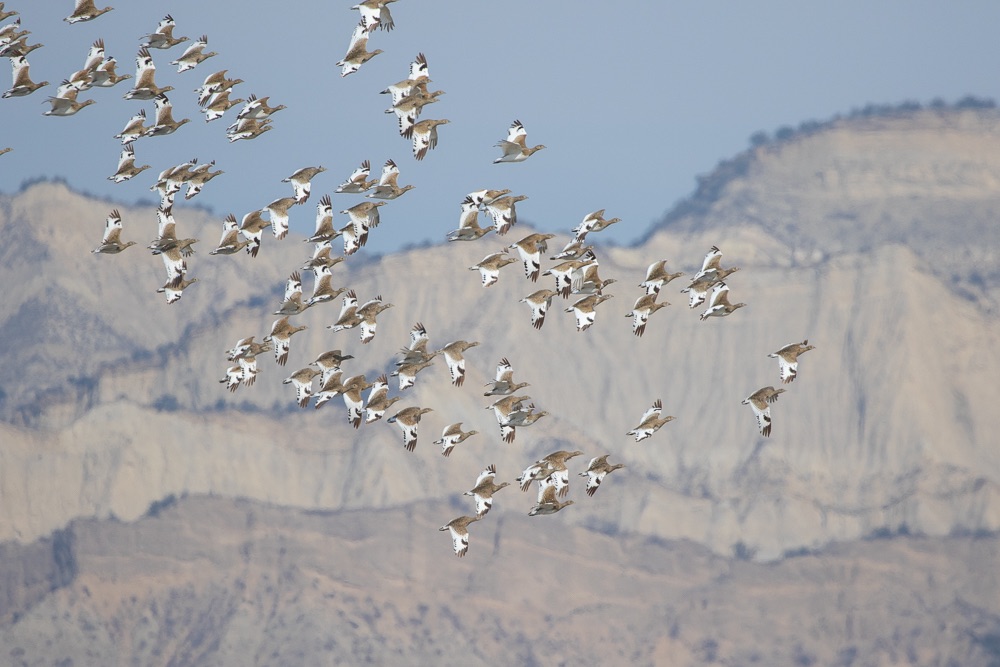
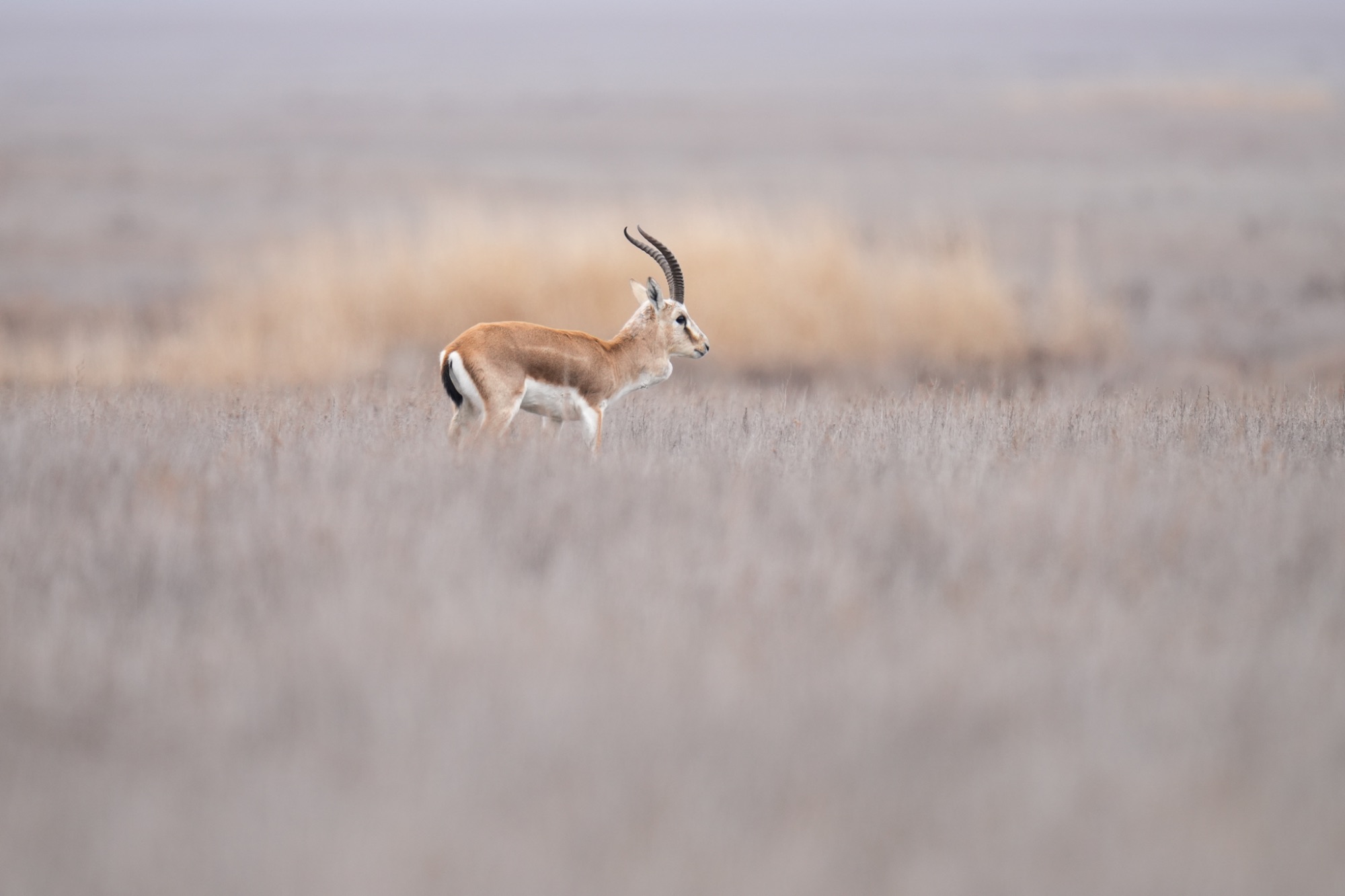
The Samukhi Plains are among the most important wintering sites for Little Bustard, with flocks ranging from a few dozen to many thousands depending on the season. We will search for large gatherings scanning every yard of the valley. February is the best. From a passerine perspective, a beautiful composition can be achieved here, including Finsch's Wheatear. Mammals are equally exciting. Although Grey Wolf, Brown Bear, Eurasian Lynx, and Crested Porcupine are elusive, the chances of encountering Goitered Gazelle and Golden Jackal are much better. As always in Vashlovani, however, the unexpected is never far away.
DAY 7 CHACHUNA NATURE RESERVE
Today's excursion covers about 80 km in total, following dirt roads across the rolling steppes and winter pastures of the Iori Plateau, where thousands of sheep graze before returning to the alpine meadows of Tusheti in spring. Unlike previous days, we will bird continuously along the route before spending more time at our main destination, Mta Dali Dam. Our day begins with familiar abundant steppe species, Corn Bunting, soon followed by Crested Lark, while the open fields hold countless Calandra Larks and Eurasian Skylarks. Every flock of Yellowhammers deserves careful attention, as it may conceal a Pine Bunting. Raptors are equally impressive, including Long-legged Buzzard, Common Kestrel, Merlin and Hen Harrier. Midway through the journey we reach an area locally known as the Eastern Imperial Eagle pylons, where these magnificent raptors are seen with remarkable regularity. Nearby olive plantations have become a favourite winter refuge for Little Bustards, which continue to gather here despite the vast surrounding steppe.
The eastern Transcaucasian Lowlands, stretching from Kakheti to the Caspian coast of Azerbaijan, support the world's largest wintering population of Little Bustards. Arriving in late November and remaining until March, their numbers vary from a few hundred to several thousand, depending on the severity of the winter. Other regularly encountered species include Isabelline Wheatear, Spanish Sparrow, Rock Sparrow, Little Owl, Western Jackdaw, Northern Lapwing, Ruddy Shelduck, and many more. Our destination, Mta Dali Dam, is a Soviet-era reservoir bordering the famous Chachuna Nature Reserve. The surrounding landscape combines tugai forest along the Iori River, open steppe, semi-desert, arid woodland and low, eroded hills, creating exceptional wildlife habitat. One of our main targets is the Black Francolin, while Chukar Partridge is another characteristic resident.
Around the reservoir and its marshes, we can expect various herons and gulls, including Pallas’s, Syrian Woodpecker, Redwing, Common Kingfisher, Common Chiffchaff and Siberian Chiffchaff, Bearded Reedling, Eurasian Penduline Tit, Rock Bunting, Reed Bunting, Eurasian Siskins, Bramblings, Hawfinches, and many other passerines. While enjoying a picnic lunch beside the dam, we will watch for White-tailed Eagle, Western Marsh Harrier, and any other raptors passing overhead, accompanied by the unmistakable calls of Black Francolins from the surrounding grassland. After lunch we cross the dam to explore the reedbeds, steppe and sandy clay hills on the opposite side. Here we will search for another wintering Wallcreeper, one of several mountain species that descends to the lowlands during the colder months. By the end of the day, it will be time to return to Dedoplistskaro, where another excellent dinner, local wine and the evening checklist await.
DAY 8 LAGODEKHI WOODLAND - EAGLE GORGE
Today, we will visit the Lagodekhi Woodland, about an hour north of Dedoplistskaro across the fertile Alazani River Valley. Part of the famous Lagodekhi Protected Areas at the foot of the Greater Caucasus, this ancient woodland is considered one of the oldest surviving temperate forests in Europe. Dominated by Oak, Oriental Beech, Hornbeam and Maple, it enjoys an unusually humid subtropical climate that often surprises first-time visitors. We will spend a couple of leisurely hours walking the forest trails, with a particular focus on woodpeckers. Lesser Spotted, Middle Spotted, Great Spotted, European Green, and Black Woodpecker are all regularly encountered. Our main target, however, is White- backed Woodpecker (ssp lilfordi). Lagodekhi remains the best-known site for this species in eastern Georgia, giving us an excellent chance of success. The forest also supports a rich community of regional woodland birds, including Great, Eurasian Blue, Coal, and Long-tailed Tit, European Robin, Eurasian Nuthatch, and many other forest specialists. Sometimes, even Waxwings are spotted here. In addition to this outstanding birding site, we may also visit Eagle Gorge or a former Soviet military airfield near Dedoplistskaro, if time permits.
DAY 9 DAVID GAREJI MONASTERY - JANDARI LAKE
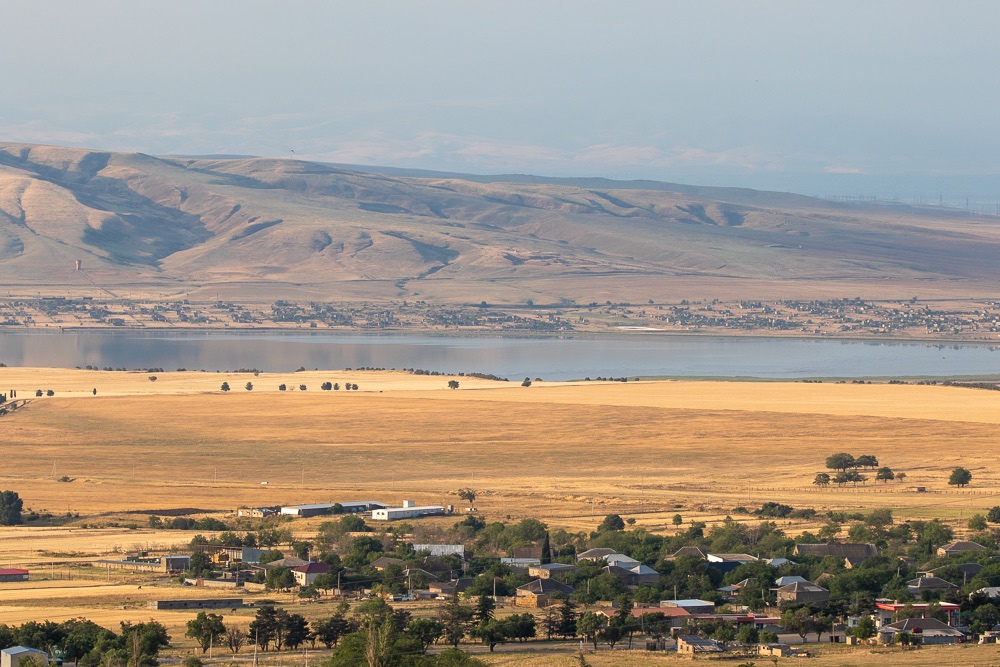
Today we return to Tbilisi, but the journey is packed with birding stops along the way. Our first destination is the David Gareji Monastery, about two hours west of Dedoplistskaro. The route crosses extensive orchards, open steppe, golden grasslands and colorful sedimentary hills, offering beautiful scenery and excellent birding. One of our main targets is the Wallcreeper, which regularly winters on the monastery's ancient stone walls. The surrounding steppe provides an excellent opportunity to fill any remaining gaps in our trip list.
Later we continue to Jandari Lake, a medium-sized steppe lake shared between Georgia and Azerbaijan, around 60 km southeast of Tbilisi. Although its waterbird community is largely composed of familiar Eurasian species, it is one of the best places to observe Pygmy Cormorant, often in numbers exceeding those of Great Cormorant during winter. And, Pallas’s Gulls are well possible here, along with Armenian Gulls. The extensive reedbeds hold a rich variety of smaller birds. Large flocks of Eurasian Tree Sparrow and Spanish Sparrow are usually conspicuous, while the dense vegetation may conceal Moustached Warbler, and the ever-present Common Kingfisher. In the scrubs along the shoreline, we will search for Great Grey Shrike, often homeyeri subspecies. As we continue towards Tbilisi, the agricultural fields and irrigation canals along the route offer further opportunities for additional birding, providing a fitting finale to our tour.
DAY 10 KOJORI FOREST - KUMISI LAKE - PONICHALA FOREST PARK
Time flies when you're having fun, but we still have one full day ahead—and it promises to be an exciting finale. We begin with a short drive to the Kojori Pine Forest, just 20 km southwest of our hotel. Perched in the foothills of the Lesser Caucasus, the forest offers beautiful views over Tbilisi and, more importantly, supports one of Georgia's best populations of Krüper's Nuthatch. By early March these charismatic birds are already excavating nest holes, making them easier to locate by their constant drumming. Kojori marks the eastern edge of the species' range. Other familiar woodland birds are likely to be present, with Eurasian Treecreeper providing another welcome target.
We then continue to Kumisi Lake, about 30 km south of Tbilisi. Although the lake is surrounded by abandoned Soviet-era holiday homes and may appear rather unassuming, it is one of the region's finest winter and early spring birding sites. The lake supports large numbers of wintering wildfowl (Mallard, Eurasian Teal, Garganey, Northern Pintail, Northern Shoveler, Common Pochard, Red-crested Pochard, Common Shelduck and Ruddy Shelduck). Careful scanning may also reveal the much scarcer White-headed Duck, one of the lake's regular surprises. Little Egret, Great Egret, Grey Heron, and many other waterbirds are common, while one of our principal targets is the wintering Dalmatian Pelican, whose flocks occasionally include a few Great White Pelicans. The gull assemblage is dominated by Black-headed Gull and Armenian Gull, but the magnificent Pallas's Gull is always a highlight. Raptors such as White-tailed Eagle and Western Marsh Harrier are regularly encountered, and we may even enjoy another encounter with Pallid Harrier.
After a picnic lunch by the lake, we head to Ponichala Forest Park, affectionately known as the "Woodpeckers' Forest". This natural broadleaf woodland, only 10 km away, is one of the best places around Tbilisi to observe Middle Spotted Woodpecker, Syrian Woodpecker, and several other woodpecker species at close range. With a little luck, we may witness the unusual winter behavior of Lesser Spotted Woodpeckers feeding on reed stems around small ponds.
Our final evening in Georgia offers a fitting conclusion to the tour. After a short walk through the historic streets of Old Tbilisi, we will celebrate with a traditional Georgian dinner, accompanied by local wines and “chacha” , Georgia's famous grape brandy.
DAY 11 END OF TOUR - 12th February
We have packed an incredible number of cool birds into this tour, but sadly the time has come to leave this extraordinary country, so we will transfer to the nearby airport after breakfast and end of the tour.